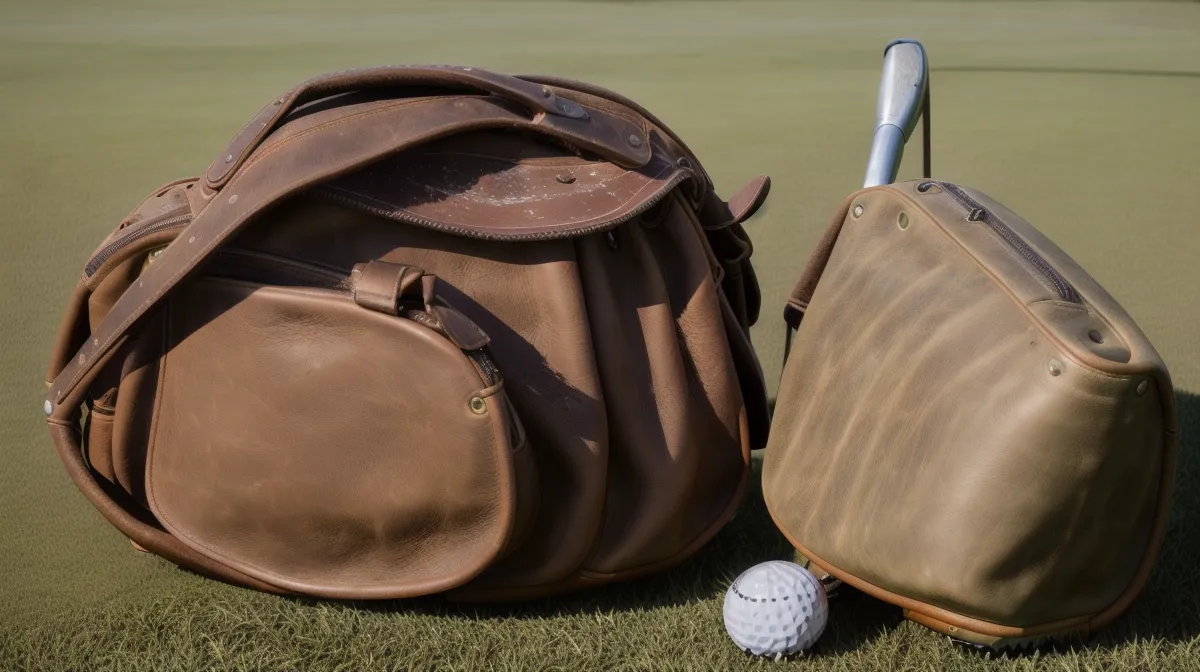
Caliche dust feels soft underfoot on a cart path, but it sits harder on the Mohs scale than the face of a wedge, and it packs a groove solid in about four holes of Scottsdale heat. Standard cleaning kits are built for courses with real topsoil, and the Phoenix valley doesn't have much of that; the gear made for Kentucky bluegrass just can't keep up with desert golf conditions.
Quick disclosure before anything else: some links on this page send commerce my way, and if you buy gear through one I earn a commission at no extra cost to you. Every pick here comes from gear I've actually rotated through on real rounds, never a press loaner or a sponsored box. Testing notes and the full scorecard log live in the Editorial Policy.
I walk the valley three times a week, and the broker half of my brain treats desert sand like industrial sandpaper instead of a hazard. It's loaded with caliche and decomposed granite, both sitting uncomfortably high on the Mohs scale of mineral hardness for anything you want touching a clubface. Scrub carelessly and you're not cleaning your clubs; you're grinding them down. I've spent about a year running different kits against this problem, everything from my waterproof FootJoy Premier Series shoes to the milled face on my putter.
Why Standard Cleaning Kits Fail Against Desert Grit
Most of what's sold at a big-box store comes with bristles that are either too soft to do much or brass bristles sharp enough to scratch a finish. I noticed the real cost on my wedges first: my notebook showed spin dropping by roughly 400 RPM on a standard fifty-yard chip, and the ball wasn't the variable that round. The grooves were simply packed with fine silt.
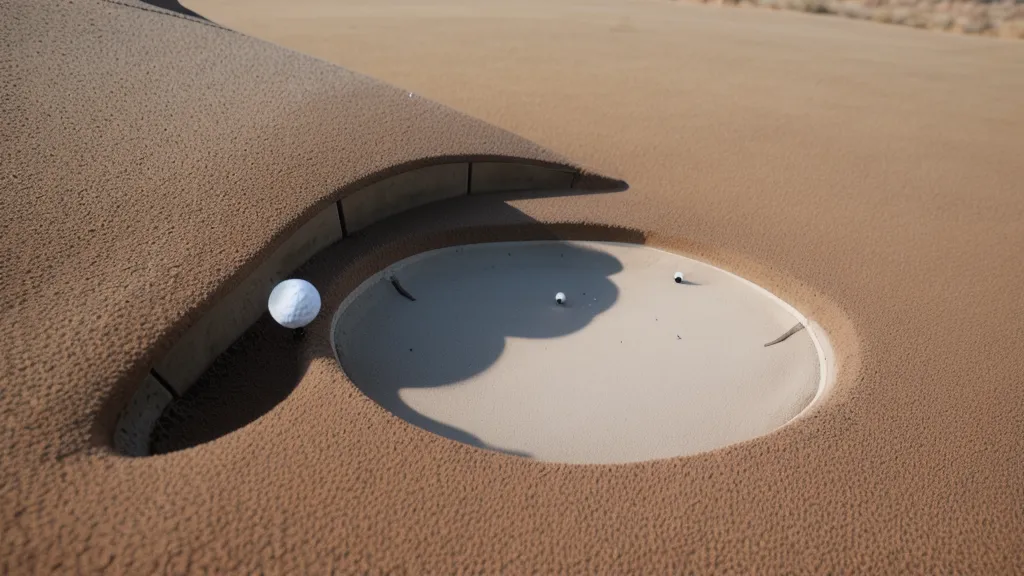
The USGA caps legal groove depth at 0.020 inches, and in the valley that narrow channel fills with sand and sweat inside four holes. What actually works is a brush with a specific stiffness, firm enough to knock granite particles loose and soft enough to leave a premium finish alone. Think about washing a daily-driver truck: you want the mud out of the wheel wells, not a steel-wool pad taken to the hood.
I tracked this across a full year of the walking log I keep, something I started calling The Scottsdale Walk, rotating through enough water-fed brush systems to fill a drawer. The honest tradeoff is this: a higher-abrasion brush head clears stubborn grit faster than a soft one, but it also speeds up clubface wear on anything forged soft. No single kit solves both sides of that at once.
Does a Water-Fed Brush Actually Beat a Dry Towel?
Yes, and it isn't close once a round gets hot. A dry towel just drags grit across the face instead of lifting it off; water suspends the particles so a brush can actually carry them away. I learned that one on a July afternoon at Wigwam Golf Club in Litchfield Park, wiping a milled putter face with a dry towel and watching it do nothing but smear the dust into paste.
My SWAG Golf Putter head is milled from 303 stainless, a gorgeous piece of metal that happens to be softer than the granite-heavy sand sitting in most Arizona bunkers. A dry wipe does nothing for it; you need a lubricant, even plain water, to float particles off the face before a brush ever touches it. Head shape matters here too, since a bigger mallet tends to forgive a sandy, off-center tap better than a thin blade ever will, which is one more reason I'd rather baby a milled face than replace one.
Balls take their own kind of damage. I've tracked cover wear on my Titleist Pro V1s against the direct-to-consumer options, and grit caught in a dirty groove cuts into a cover on the first well-struck wedge shot, not the tenth. Kenny Prater, a guy I keep crossing paths with on weekend tee sheets around the valley, is constantly swapping low-compression balls depending on how hot it is that week; his running theory is that a compression that feels right at seventy degrees goes dead once it's north of a hundred, and a dimple pattern built for greenside spin loses that edge even faster when the face cleaning it is caked in silt. A scuffed white ball also gets harder to track against desert glare than a fresh one, which matters more than people think once depth perception starts going on the back nine. For the budget-conscious side of the bag, Vice Golf balls have held up better than expected against a sand-caked wedge, but no ball survives a face that hasn't been cleared of caliche. There's more on that ball testing in my SWAG Golf Putter Review, where face cleanliness and green-side feel come up again.
Turning the Push Cart Into a Mobile Cleaning Station
The laziness that kicks in around hole thirteen, when it's pushing 110 and all you want is shade, is the real enemy of clean grooves, not the sand itself. Converting my push cart with the Alphard Golf Club Booster V2Pro fixed that indirectly: since the cart does the pushing, both hands stay free between shots to run a spray-and-brush kit instead of gripping a handle.
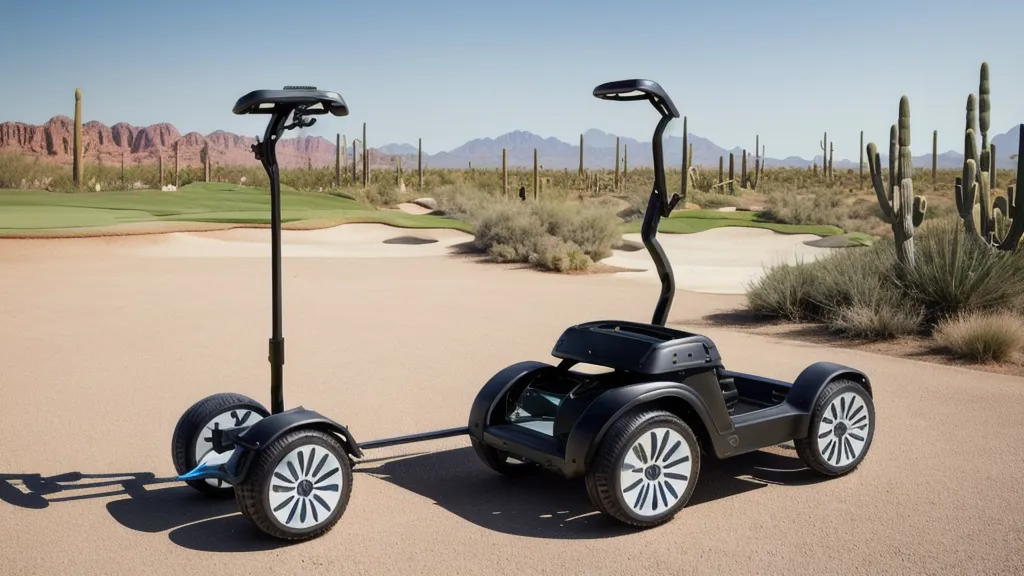
Skip Dabrowski, who I play with most Saturdays, moves faster than anyone in our group no matter what the scorecard looks like, and he was never going to wait around while I scrubbed a wedge face at the bag. That's the real reason I mounted a heavy-duty magnetic towel and a water-fed brush straight to the cart frame; it lets me hit the grooves while the cart is already rolling toward my ball instead of standing still.
Grit gets into more than clubs here too. It works into the wheel bearings that keep a cart tracking straight on a downhill, into the hinge that has to fold flat enough to actually fit a trunk, and, because mine runs on a motor rather than just legs, into the battery terminals, which is why I pull those connections apart and clean them twice a season instead of waiting for the charge to quietly stop holding. The two-year warranty on the Alphard hardware has bought some peace of mind there, since I'm spraying water close to a motor housing on a regular basis; it's built like a good pair of work boots, tough enough for the job but not something you get to ignore completely. The full maintenance rundown is in How to Maintain the Alphard Club Booster V2Pro.
What Happens When You Skip Cleaning for a Few Holes?
It sets like concrete, basically. Wait until the turn and the silt that was loose grit at the ninth has dried into something closer to mortar by the time you're standing over your tee shot on ten. The rule I actually follow now is simple: clean the face after every shot that touches dirt or rough, not just every few holes, and never save it for the cart barn. Skip the grooves going into a shot and you'll see a shredded-looking cover on a sixty-dollar dozen after one bad strike, and no amount of brushing afterward brings that cover back.
Is It Just Clubs, or Does Grit Wreck Everything Else in the Bag?
Clubs are just the most visible casualty. Shoes take their own beating in this stuff: traction lugs built to bite hardpan clog with grit long before they wear out any other way, and the lateral support meant to protect a knee on a sloped fairway loses its edge once sand works into the seams. A waterproof membrane built to breathe in July heat stops breathing the same way once its pores are packed with dust, and the same goes for any moisture-wicking shirt meant to move sweat off your back on a walking round.
Gloves get it worst of all, and this is where I actually learned something the hard way. Cabretta leather gloves were the first thing I gave up on for summer rounds; mine soaked through before the turn on every July round I played in them, the leather going dark and slick until I couldn't trust grip pressure on a three-foot putt, let alone a full swing. I don't have that problem in August anymore. Glove comes off after eighteen holes now and the palm underneath is still dry, which tells me more about a material than any spec sheet ever will. A short burst of compressed air across the stitching after a round gives off a quick cold hiss against skin that's still damp from the back nine, and it clears grit out of seams a brush can't reach.
Even the rest of the bag isn't safe. A snug headcover keeps grit off a milled putter face between shots, which matters more on a boutique flatstick than most golfers assume. Up through the irons, a forgiving head needs clean grooves to launch the ball the way it was designed to, a utility iron standing in for a long iron loses that whole advantage once its face is packed with silt, a wedge's bounce can't interact with hardpan turf correctly once grit's jammed into the leading edge, and a driver's forgiveness on an off-center strike depends on a face that isn't coated in granite dust either. None of it stays isolated to the club you're actually swinging.
Final Verdict on Keeping Desert Grit Out of Your Bag
After fifty-plus rounds testing this across spring rain and sweltering summer, my notebook says the same thing every time: the best kit isn't the priciest one, it's whichever one makes high-frequency, low-pressure cleaning easy enough that you'll actually do it mid-round instead of waiting for the 19th hole. I'm playing to about a 14 right now, and the rounds where my grooves stayed clean are consistently the rounds where my short-game numbers hold up late instead of falling apart after the twelfth.
Use a water-fed brush, keep the bristles medium-stiff so you respect that narrow legal groove limit, and always lubricate the face before you touch 303 stainless steel with anything abrasive. Keeping gear spotless in Scottsdale heat is basically a part-time job, but it protects resale value on the limited-drop stuff and keeps spin rates where they're supposed to be. Check the current pricing and availability on the gear mentioned above through the links in this piece to keep your own bag valley-ready.