The Real Reason Golf Cart Stability Fails on Hills
An Alphard motor unit weighs about 11 lbs, and nearly all of that sits at the rear axle. Strap a fully loaded bag at 35 lbs onto that frame and the setup becomes a lever, not a platform. Once that lever tips past vertical, the motor stops being a propulsion system and turns into a pivot point; you end up chasing a runaway cart down a fairway while your group watches from the tee. On flat ground none of this matters. The 2.4 GHz remote responds instantly, closer to a well-built RC car than a piece of golf equipment. Point the nose uphill, though, and the weight riding high in the bag pulls the front wheel clean off the grass. Guys who blame the hardware first tend to keep blaming it. Lonnie Gruber, a friend from way back who took up golf a couple years ago, texts me before almost every gear purchase, and the questions are nearly always about which part will fix a problem rather than what's causing it. He's the type to fault the shaft before he'll look at his own swing on a mis-hit iron, and cart tipping gets the identical treatment from him: which wheel do I need, never what's riding in my bag.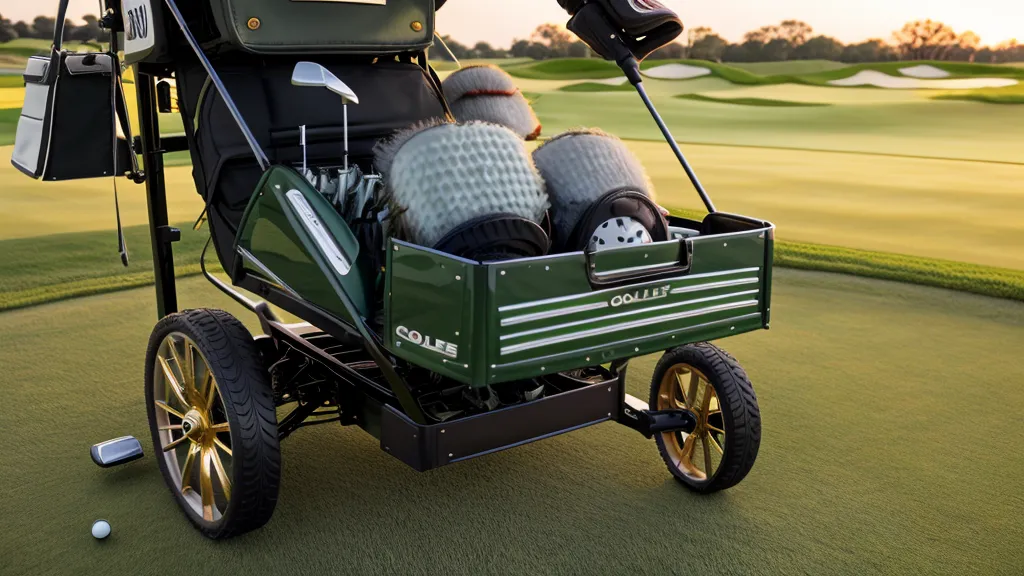
Bermuda Grass and the Physics of a Climb
Wheel choice does matter, just not the way most guys assume. Bermuda grass creates noticeably more friction against small guide wheels than bentgrass does, and that friction acts like a brake mid-climb. A single anti-tip wheel that catches a thick tuft on a slope can trip the cart instead of steadying it. Switching to a dual-wheel setup solved that specific failure by widening the footprint enough to stop the side-to-side wobble on side-hill lies. The Club Booster V2 also leans on a gyroscope to hold a straight line, but a gyroscope can't fight gravity if the wheels themselves aren't planted. Rock the cart hard sideways to test the base and you'll hear it before you feel it; the shoe sole drags against the cart path with a low rubbery squeal right at the point the wheels lose their bite.
Wide Axles Fix What Anti-Tip Wheels Can't
Width ended up mattering more than wheel count. A wide-axle extension kit adds about 3 inches to the wheelbase, and that measurement does more for hillside stability than any wheel swap I tried. There's a metallic clink when the locking pin seats correctly into the motor housing, and once you hear it, the cart is ready for a ridge. Most tip-overs on converted carts happen during sudden acceleration on inclines steeper than 12 degrees; a wider stance spreads that torque across a broader base instead of letting it twist the frame sideways.Load the Bag Like It Matters
Before any of the motorized setup, I tried solving the same problem from the wrong direction: a lightweight stand bag with legs thin enough to fold flat, on the theory that less weight up top meant less to manage. It didn't work. The legs buckled sideways on any real grade at Kierland, and the bag went down more than it stood up. The fix that actually holds is boring: heavy items go in the bottom-front pockets, straps get pulled tight enough to keep the mass close to the front wheel, and the accessories become a safety net instead of the whole plan. Anti-tip wheels and wide axles are there to catch mistakes, not prevent the need to load the bag correctly in the first place.