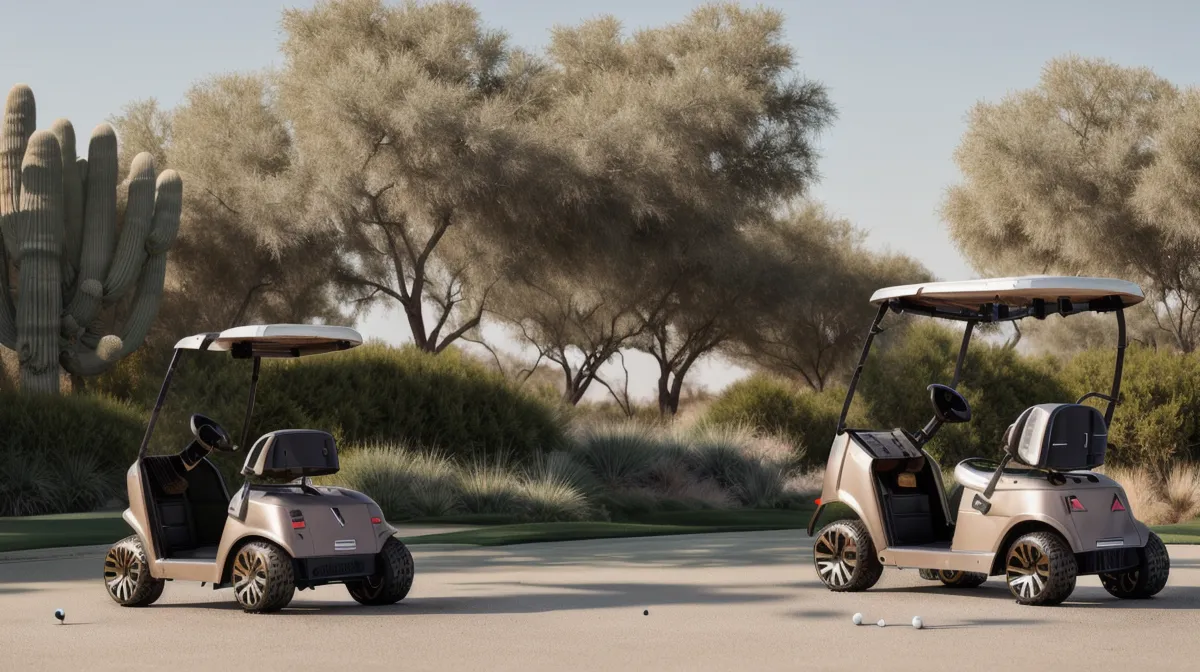
My group throws this question at me every time my bag rolls past them on its own at Kierland Golf Club, somewhere north of ninety degrees and not one of us jogging the fairways anymore: whether it actually makes sense to keep buying accessories for a cart that already does the walking for you. I'm a walking golfer first and a gear-testing obsessive second, and right now the Alphard electric caddy living on the back of my push cart is doing more for my knees than any club in the bag.
A few links below send a small commission my way if someone buys through them, at no extra cost to you. Every product mentioned has actually ridden on my cart or in my bag for real rounds; none of it arrived as a press loaner. The full testing notes live in the Editorial Policy if you want the receipts.
What's Actually Different About an Electric Caddy You Walk Behind?
Bolting an Alphard Golf Club Booster V2Pro onto my existing push cart took under half an hour. Swapping a handle you push for a remote you carry sounds like a small change until you're standing on a slope at Kierland watching the cart cross it without you touching it, and the torque it takes to hold a line through loose gravel is nothing like the resistance you feel pushing a handle by hand. Get the center of gravity wrong and the front wheel drifts sideways like a shopping cart with a bad caster; stability on hilly terrain is really its own topic when you're talking about a manual frame, but bolt a motor to it and the whole calculation changes.
How Do You Keep Weight From Killing Your Battery Range?
A heavy cart bag was my first mistake; by the twelfth hole on a walking day my shoulders ached like I'd carried a duffel through an airport, and no accessory was going to fix that, so it went into the donation pile before it ever touched the Alphard frame.
The V2Pro ships with a battery Alphard rates for thirty-six holes, which sounds like plenty of buffer until you're fighting front-wheel drift the whole back nine and watching that range number drop faster than you'd like. Moving the heavy stuff low and toward the center of the frame instead of hanging off the back handle straightens the tracking right out.
I also stopped carrying a full box of balls on the cart; a sleeve of Titleist in the side pocket is plenty for anyone not losing more than twelve in a round, and matching ball compression to your swing speed is a different rabbit hole I've covered elsewhere. Ball cover durability against cart-path scuffs deserves its own review too, but here the point is simpler: less weight riding high and to the rear keeps the nose planted when you're steering with a remote instead of your own hands. Bag weight for someone walking and pushing, not carrying, is worth a deep dive on its own, but the short version is that a stand bag built for a push cart frame rides completely differently than one built to be slung over a shoulder.
Lighter Clubs Change Back-Nine Fatigue More Than You'd Think
Pairing this whole setup with a lighter iron set is what actually fixed my back-nine fatigue, more than any accessory on the cart itself. That switch is covered in Best Cobra Irons for Seniors and Golfers with Knee Issues, and the short version is that a knee that's already had surgery doesn't care how smart your cart is if you're still swinging heavy blades all day. How forgiving a set is on launch has nothing to do with how the cart carries the clubs, and whether a mallet or blade putter forgives a bad stroke better is its own debate; here it only needs to ride quietly instead of rattling around.
The Accessory Slots Worth Actually Using
Once you're not standing behind the handle anymore, your phone and your GPS need somewhere solid to live, and I went through two mounts before finding one that doesn't rattle loose on the desert gravel near the cart paths.
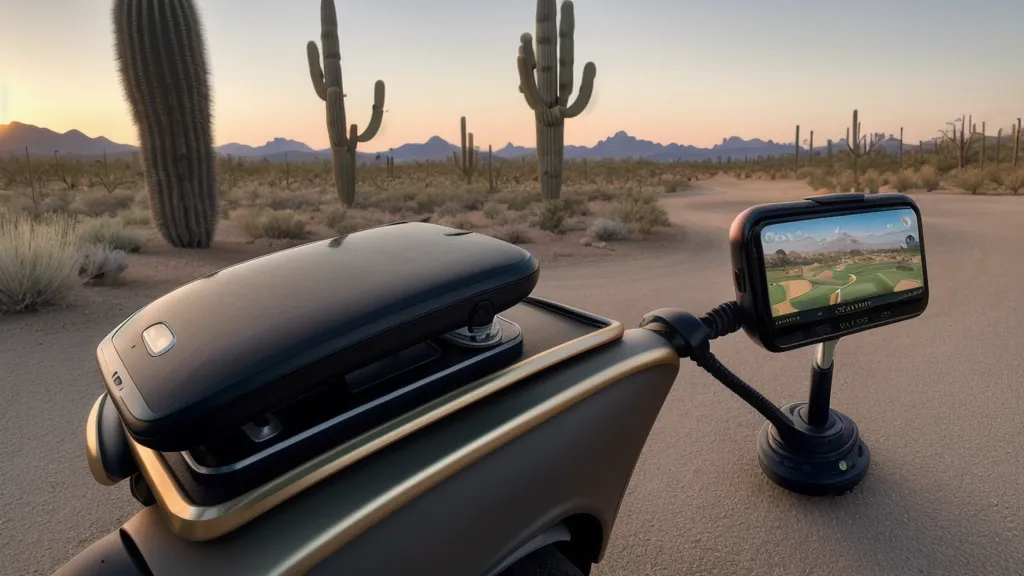
The brake is the other accessory nobody mentions until they need it; mine gives one clean metallic snap when it catches on a downhill instead of the mushy give I got used to on my old manual frame. An umbrella extender earns its slot too, since the stock holder sits too low for anyone over six feet walking upright in the middle of summer.
One thing that hasn't earned a permanent slot is my SWAG Golf Putter; it's milled from 303 stainless steel and looks the part, but a humid morning turns the grip slick fast, and how hard you're gripping under that kind of pressure is a conversation for another piece entirely. The right accessory keeps a club like that standing straight and quiet instead of knocking against the frame.
Moisture-Wicking Apparel Matters More Than the Mount Does
None of this matters much if you're soaked through by the turn, so the apparel underneath carries more weight than people expect.
Best FootJoy Moisture Wicking Golf Shirts for Walking in the Heat covers what's worked for me across enough rounds to trust it. How long a glove holds up before the palm starts breaking down in desert heat is its own question answered elsewhere; shoe traction on hardpan waste areas matters more to your footing than anything bolted to the cart, and that's a separate review too.
Staying cool keeps your attention on the remote and the next shot instead of on how much you're sweating.
Chasing a Good Short Game Around the Cart
The remote system only pays off if your short game keeps you near the cart instead of hiking back and forth across the green.
That wedge question got real time and testing, covered in How to Choose the Best Wedge Bounce for Hard Desert Fairways, because a thinned chip that sends you thirty yards past the pin costs more steps than any cart accessory saves.
Sitting around a 14 handicap most seasons, I notice the difference in pace of play more than I notice anything mechanical on the cart itself.
Fifty Rounds Later, Here's What Actually Earned a Spot
Fifty rounds in, the pattern in my notebook is pretty clear.
The hardware is backed by a two-year warranty, and the battery degradation some owners report after a season or two of heavy use hasn't shown up for me yet, mostly because I don't leave it charging in a hot garage overnight.
A neighbor of mine treats doubles pickleball at Scottsdale Ranch Park three mornings a week the same way I treat this cart, obsessively, with her own version of a gear notebook, and she's the one who pointed out I hadn't complained about my feet in weeks.
I remember flipping my scorecard over after a thirty-six-hole Saturday at Kierland and realizing my left foot hadn't blistered once, the first time that had happened since I started walking this many rounds.
That's the actual return on all these accessories: not any single mount or holder, but the fact that the whole system finally stopped fighting me.
If you're still pushing a manual frame and your knees or your back are asking you to stop, the Alphard Golf Club Booster V2Pro is worth a serious look before you give up walking altogether.