
Two hundred and five yards over the wash at Wigwam Golf Club, out in Litchfield Park, used to end one of two ways: a 4-iron that came up thirty yards short in the desert scrub, or a knee that reminded me why running stopped being an option in the first place. Long irons and I have never gotten along, and after enough rounds proving it, I went looking for a Cobra hybrid that could close that gap without turning my bag into something I'd be embarrassed to pull out at a Wigwam member-guest.
Quick disclosure before the swing thoughts: some links below send commerce my way, on Cobra gear and a couple of other pieces I actually rotate through. Buy through one and I earn a small commission; you pay the same price you would anywhere else. None of this comes from a press kit — it's gear that survived, or didn't, real rounds around the Valley. Testing notes live in the Editorial Policy.
What My Notebook Said About the Long Irons
My notebook doesn't lie, even when I want it to. Once a knee injury made running impossible, golf became the outlet, and I turned into the guy at public tracks around the Phoenix valley with a spreadsheet for everything: yardages, ball flights, which grip wore through by round thirty. For a stretch I carried a 2-iron because it looked sharp standing in the bag; I never hit a green with it, not one, and it rode along as dead weight while I bladed shots into the scrub.
Elevation gets some of the credit for what a 4-iron can do out here; the Valley sits at a Scottsdale elevation that gives the ball a little extra hang time in thin air. None of that matters if the ball never climbs high enough to catch it. My average 4-iron carry in the notebook was really just my best-ever number, logged on a range day with a tailwind behind it, not something I could count on with the flag tucked and a swing that isn't twenty-five anymore.
So I went looking for something that didn't feel like carrying a shovel. Cobra's Darkspeed and Aerojet hybrids were the obvious place to start; clubs that still looked like golf clubs, not a cinder block on a stick, but promised the launch the long irons wouldn't give me.
Do the Baffler Rails Actually Save a Bad Lie?
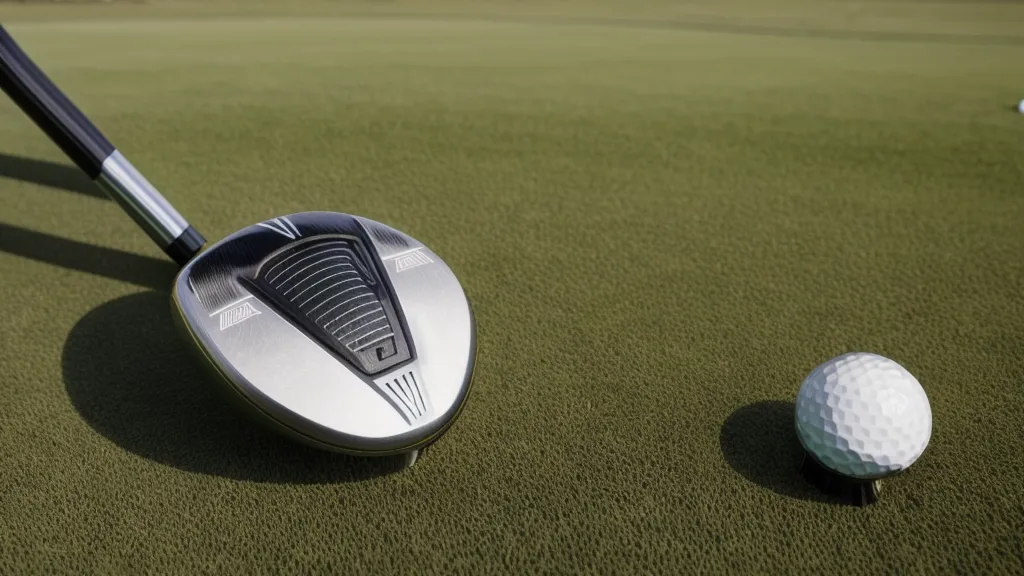
Cobra has leaned on Baffler rail technology since the 1970s, and it sounds like marketing copy until you have to hit off a hardpan lie or a dormant winter fairway. Caught heavy out of a sandy depression off the fairway at Wigwam, the kind of strike that would have buried a 4-iron and sent a jolt straight into my knee, the rails skipped across the dirt instead of digging into it.
The result was a muffled thwack, the same sound a Vice Pro Plus makes meeting the center of the face, and a ball that still found the front fringe. Forgiveness beats a pretty topline when you're playing for a skin on a Saturday morning. Swapping the 4-iron for a 4-hybrid gets the ball up noticeably faster off a mediocre strike, and that extra height is what keeps a shot sitting on the green instead of rolling off the back like a marble on tile.
Anyone stuck between clubs on the long par-3s ends up asking the same question I did, and I ran through more of that gap-filling logic in Best Hybrid Golf Clubs for Reaching Long Par 3s from the Fairway.
Fast Tempo Punishes the Wrong Hybrid
My swing isn't slow and syrupy; I come at the ball like I'm trying to kill a snake, and most generic hybrid reviews get written by guys with tempos nothing like mine. Standard hybrids tend to be weighted to help players close the face, which for a fast tempo turns into a snap-hook headed for someone's backyard. Cobra's Darkspeed line surprised me here; the weighting felt neutral instead of fighting to roll the toe over.
Lonnie Gruber, a guy I've known from contracting circles for years before he picked up golf seriously, texted me about these hybrids before he bought a set, same as he does with most gear now. What took me longer to figure out on my own is that a heavier, stiffer hybrid shaft did more for keeping the ball in the fairway than any weighting claim printed on the box. Stock shafts are rarely the right shaft for anyone who spent years building leg drive on a run instead of a downswing.
Ball choice matters too, though the clubhead has to be right first. A Titleist ball holds its flight better once the clubhead stops fighting you, and matching compression to your actual swing speed instead of the number stamped on the box is its own rabbit hole worth chasing separately. Cover durability off the cart paths out here is a different question again, one that chews through a sleeve of balls a different way than distance ever does. I stopped trying to gap my hybrids by grabbing a generic "3-hybrid" and hoping; running a short set through the mid-length gaps, roughly where my 3, 4, and 5 irons used to sit, turned those in-between yardages from a guess into a swing I trust.
Saving the Knee for the Back Nine
Sustainability turned into its own project once the hybrids solved the ball-striking half of the equation. Walking eighteen at Wigwam in August heat is its own gauntlet, and I tried a lightweight stand bag first, the kind with legs that looked fine in the shop; on the sloped Bermuda fairways out there it wouldn't stay upright, tipping over mid-round until I gave up and dragged it by hand for the last few holes. Weight distribution on a stand bag turns out to matter as much as leg quality, something I only learned once it was already failing me on a hillside.
That failure is what pushed me toward a push cart instead, and eventually toward converting it. I picked up the Alphard Golf Club Booster V2Pro [Editor's Pick] to turn a manual push cart into something closer to a remote-controlled caddy. It sounds like a luxury until the knee reminds you why it isn't: a 36-hole battery on a single charge and a two-year warranty, which is about as long as anything survives in my rotation anyway. Whatever frame you start with still needs its own stability check on hillier desert layouts, a subject that deserves more room than a sentence here.
By the twelfth week of leaving the long irons in the garage for good, the tell showed up somewhere I wasn't looking for it. Pulling my glove off after a round at Wigwam in August, the palm was still dry; none of the white-knuckle grip pressure that used to soak straight through the leather by the turn when I was muscling a 4-iron over the wash. Less tension in the hands turned out to be as real a sign of progress as anything written in the notebook. Heat and glove longevity in the desert is a whole separate fight on its own, but the tension part is what caught me off guard.
I even picked up a precision-milled 303 stainless SWAG Golf Putter [Premium Pick] along the way, mostly because reaching greens in two with a hybrid meant I might as well three-putt in style. Grip pressure on a flatstick is its own can of worms, especially for anyone dealing with wrist discomfort, and that topic deserves its own writeup rather than a paragraph tacked onto a hybrid review.
Anyone else dealing with physical limitations that make a full swing complicated should look at Best Cobra Irons for Seniors and Golfers with Knee Issues for the shorter end of the bag.
The Verdict After Enough Rounds to Trust It
Fifty-plus rounds across three different courses is enough for a notebook to stop lying, and it's enough to drop a handicap from an ugly number into the low teens without pretending the swing suddenly got prettier. Shots from the 185-to-210 range stopped being a stressful guess and started being swings I actually trust, often enough that a birdie is back in the conversation instead of a scramble for bogey.
Baffler rails aren't just a callback to the '70s; they're a safety net for a tired swing that still has to get the ball airborne. Whether it's the Darkspeed for someone with an aggressive tempo like mine or the Aerojet for a player who needs more outright launch, Cobra has the hybrid formula figured out better than most of what's on the rack. For shoes, FootJoy has earned the spot in my rotation on the strength of a genuine waterproof warranty, which matters more than people think on a course that still runs sprinklers at odd hours; traction on hardpan desert waste areas is a different question entirely, worth its own review rather than a paragraph here.
The lesson that stuck: stop carrying clubs that look sharp but perform poorly. A scorecard doesn't care how thin an iron's topline is if the ball's sitting in a bunker. Swap the long irons for something with rails, get the cart doing some of the walking, and it's still possible to keep up with guys half your age without needing ice on the knee at the turn.
For anyone still fighting the flatstick once the hybrids get you to the green, the case for a Mallet vs Blade Putter for Amateurs with Inconsistent Strokes is worth reading before the next putter purchase, mine included, since forgiveness at the flatstick matters as much as forgiveness in a hybrid does.