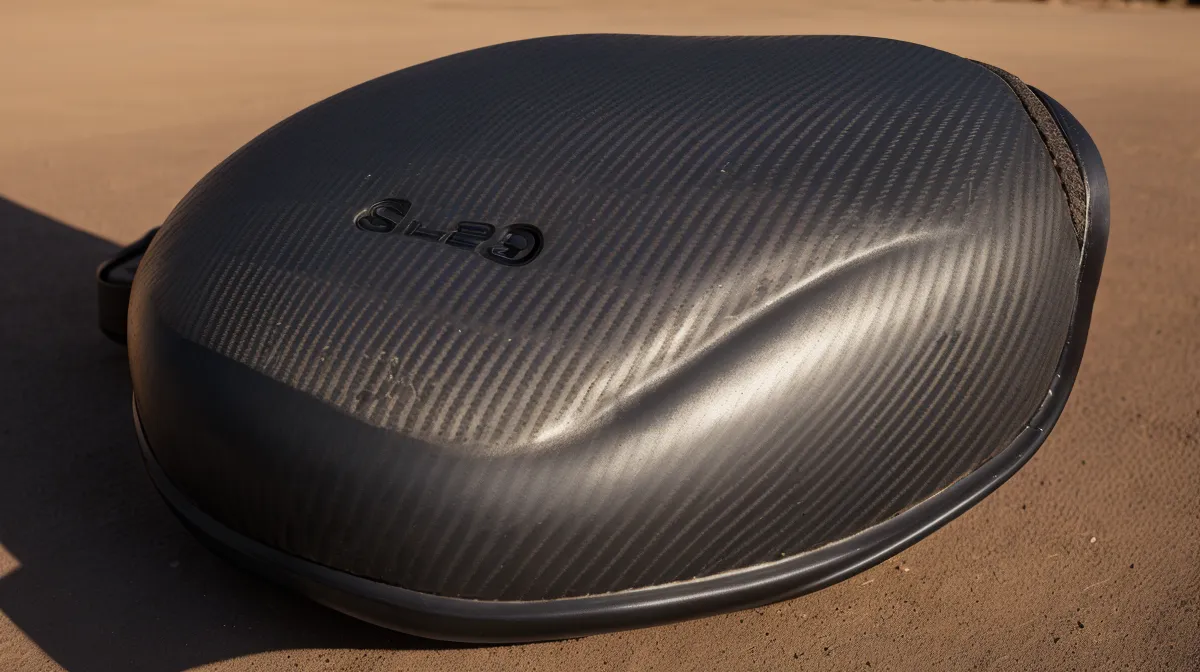
Fifteen cubic centimeters separates a Cobra Darkspeed LS head from the 460cc ceiling the United States Golf Association allows, and that gap is the whole reason half my Wednesday group treats this low-spin driver like either a miracle or a mistake.
A quick disclosure before the swing talk: a few links in this piece run through affiliate programs, and a sale through one pays me a small commission at no extra cost to you. Every piece of golf equipment in this review came out of my own bag, tested across real rounds instead of a fitting-bay demo day.
Running left my knees somewhere around 2020, and golf filled the gap. I've kept a notebook on every round since: yardages, wind readings, spin estimates scribbled in the margins. Six years into that habit now, my villain has stayed the same. At an 8.6 index and right around 104 miles per hour of clubhead speed, I ballooned drives into the afternoon wind more often than I want to admit, and that's the real reason the Cobra Darkspeed LS Driver ended up in my bag, not because a headline told me to.
The Myth Behind a Smaller Low-Spin Driver Head
Most golfers assume any low-spin driver is a strict upgrade: a smaller head that flies straighter and rolls further for everyone who buys one. That is not how it works. Cobra shrank the Darkspeed LS to 445cc, well under that 460cc limit, and built a compact, pear-shaped profile that looks closer to the clubs I grew up watching on television than anything else on a current pro shop rack. Shrinking the head let the engineers pull mass low and forward, which lowers the dynamic loft at impact and kills spin before the ball leaves the face.
Does Shrinking the Head Really Fix a High Flight?
Sound was the first tell. One early morning on the range at Raven Golf Club at South Mountain, the Darkspeed LS gave off a dense, muted thwack instead of the hollow ping I expected from a bigger driver. That density is the whole point: mass sitting directly behind the strike zone kills ballooning spin on center strikes. Center strikes being the key phrase. The same aerodynamic curves that trim drag through the swing also trim the margin for error, so the forgiveness a 460cc head buys on a toe or heel miss is not part of this deal. A full breakdown of that spin-versus-forgiveness trade between this head and the bigger driver I used to carry lives elsewhere on this site; here it's enough to say the trade is real, and it bit me more than once.
My playing partner Hank Viteri has read every equipment review Cobra, TaylorMade, and Callaway have published this year and still carries the driver he bought three seasons ago. He needled me about the Darkspeed LS for a month before I actually gapped it against my old gamer on the course instead of just the range, and he wasn't wrong to be skeptical. Catch this head a half-inch out on the toe and it will not draw gently back to the fairway the way a deeper-set driver would. It drops spin fast off the gear effect and turns into a low, diving hook that runs straight into the desert scrub.
Setting the Weight Ports Cost Me a Weekend
Most of the real tuning happened in my garage, not on the course. I keep a pegboard wall out there sorted by grip thickness, thin to fat, and a tally of rounds played chalked onto the cinder block in marker that never quite scrubs off. By two in the afternoon the one window in that room throws enough flat sun to make a launch monitor screen useless, so the real adjustments happen in the morning. The Darkspeed LS gives you three movable tungsten weights, two up front near the face and one in back, plus a hosel sleeve that adjusts loft a degree and a half either way. I moved all the heavy weights forward on the first weekend, thinking more forward mass meant more of the low, piercing flight I wanted. Instead I got heel knuckleballs that looked great for a hundred fifty yards and then dropped out of the sky.
A stretch of range sessions later, I landed on a split that put most of the weight toward the heel and rear. That setup kept the low launch without the heel strikes diving into the turf whenever my path got steep. This is the unglamorous part of owning a low-spin head: it rewards the player who will actually sit down and test combinations instead of leaving the stock setup in because the fitting cart said so.
Ground Roll on Baked Fairways at Raven
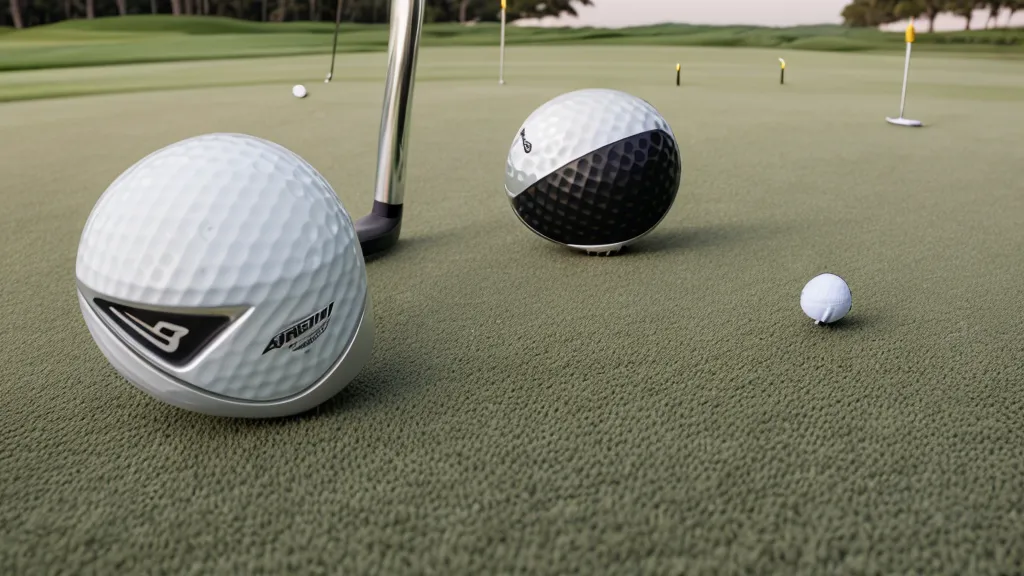
Raven Golf Club at South Mountain runs firm enough by midsummer that a flat drive outruns a high one by thirty or forty yards. That firmness is where this driver earns its spot in the bag. Lower backspin on a hardpan fairway turns into real ground roll instead of a ball that checks up short. The ball matters here too. I ran comparisons between the tour-standard Titleist Pro V1 and the direct-to-consumer Vice Golf Pro Plus off this same tee, and the firmer Pro V1 cover held its flight a touch flatter under the Darkspeed LS's lower spin numbers than the softer Vice ball did. Anyone still choosing a ball to match a low-spin head should read Best Low Spin Golf Balls for More Distance and Accuracy, which gets into how cover construction changes the way spin shows up off different drivers.
None of that forgives a bad swing path. Standing on a tee at Raven with the fairway pinched tight by rock on both sides, I've watched this driver turn an over-the-top move into a hard, low slice that does not bend back toward safety the way a bigger head sometimes will. Players who spray it all over the face and still expect the ball to find the short grass should read Best Vice Golf Balls for Amateurs Who Frequently Lose Balls before spending money chasing a problem this head will not fix.
The Push Cart Detour Had Nothing to Do With the Driver
Walking Raven in July with a rebuilt knee is its own test. My bag rides in the bed of the truck on the drive over, and by the time I pull into the lot it has already picked up that specific mix of sunscreen and warm rubber every bag in this state collects by July. For a while I made the walk harder than it needed to be. The aluminum push cart I leaned on before this one wobbled badly enough on the downhills that I had to grab the frame more than once to keep it from tipping into the rough, and that kind of instability does more damage to your swing by the back nine than any driver spec ever will. Fatigue changes your hip turn, and a slower hip turn is exactly when a low-spin head starts punishing mis-hits instead of rewarding center contact.
Switching to the Alphard Golf Club Booster V2Pro electric conversion fixed the cart problem outright. The unit bolted onto my existing frame in under half an hour and has carried a full eighteen holes on one charge every time since, though owner threads make it clear the battery is worth watching after a couple of heavy seasons. Rolling down the cart path off the 15th at Raven, where the grade drops hard enough to run a loose cart away from you, mine held a straight line for the first time all year. A reader named Alma Vickery emailed about that same hole in her own game after finding my push cart notes; she mentioned her score before she even got to her question, the way she always does, and what she wanted to know was whether a steadier cart does more for a tired back nine than a new driver. For most mid-handicap walkers, it does. The full breakdown is in The North Valley Hill Test: Why My Push Cart Finally Stopped Winning the Battle Against My Knee.
So Who Should Actually Buy This Driver?
Here is the correction, stated plainly. A low-spin head is not a universal distance fix. It is a tool for one specific swing problem, and the myth that a smaller, lower-spin driver automatically helps every golfer is exactly what gets amateurs in trouble at the counter. If your ball climbs high and dies with no roll, and you find the center of the face more often than not, the Cobra Darkspeed LS Driver is worth the fitting-bay hour it takes to confirm. If your miss wanders all over the face, a full-size 460cc head with deeper rear weighting will save you more strokes than this one ever could. The Cobra Puma lineup has scored well in independent forgiveness testing specifically because it does not force that trade-off as hard as the Darkspeed LS does, though it will not strip spin the way a true low-spin head needs to. Know which player you are before you buy either one, and let a launch monitor confirm it instead of a headline.