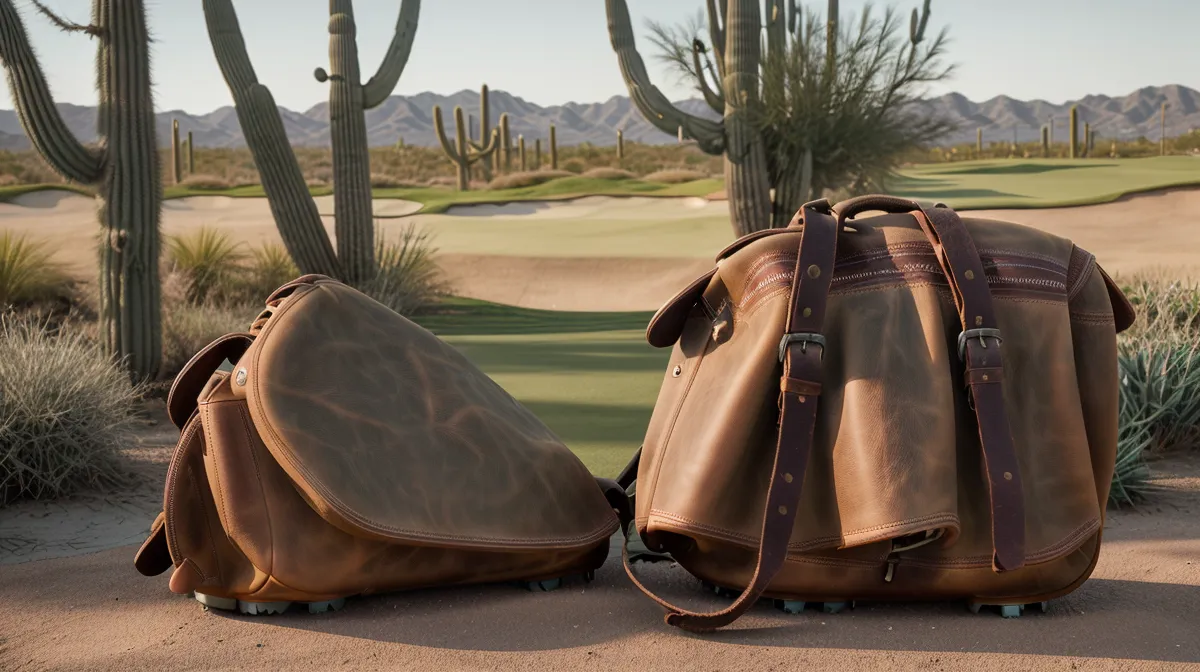
Eight percent. That's what the humidity gauge on my phone read the afternoon I finally worked out why every bargain-bin polo I owned turned to sandpaper by the back nine at Aguila Golf Course in West Phoenix. Walking golfers in the desert don't get graded on how a shirt looks standing still in a pro shop; the test is five miles of fairway, cart path, and rough with the sun doing what it does to a black asphalt cart barn. I carry my own bag most rounds, and by the time I'm off the tee on the back nine, moisture-wicking golf apparel has stopped being a marketing term and started being the difference between finishing the round and limping to the clubhouse looking like I lost a fight with a garden hose.
Six Years of Walking Instead of Running
Six years ago a knee injury ended any chance of marathon training, and golf became the replacement; I still wanted to cover ground rather than sit in a cart, which meant eighteen holes turned into a genuine hike across desert terrain. A full loop at Aguila covers more than five miles once you count the walk from green to next tee, and doing that from May through September means gear has to do actual work instead of just existing. Somewhere in there I started keeping a spreadsheet of yardages, ball brands, and which shirts survived the wash after thirty rounds of real sweat, because every review I found online tested a shirt for twenty minutes on a range and called it done.
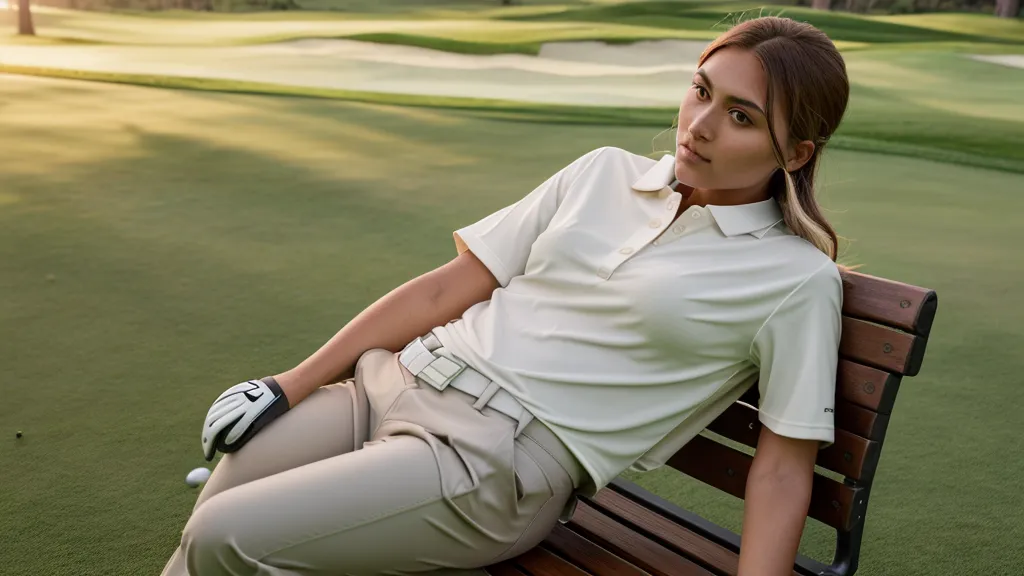
Low humidity is the twist that catches new walking golfers off guard; readings under fifteen percent are normal here in peak summer, which sounds like relief until you realize it just means sweat evaporates fast enough to leave a gritty white residue behind. That drying speed turns a cheap synthetic into something closer to sandpaper against the skin by the turn, and it's the reason FootJoy became the shirt I default to instead of chasing something newer every spring. They aren't reinventing anything season to season; they're just paying attention to what a shirt does when a real body is moving through actual heat instead of sitting on a mannequin. Early tee times change the calculus some; there's a specific damp cold that comes with a pre-dawn first fairway, dew soaking through mesh shoes before the sun turns the heat back on, but by the second hour the shirt is doing all the work again.
What Is Moisture-Wicking Fabric Actually Doing?
Moisture-wicking sounds like marketing shorthand, but the actual mechanism is capillary action pulling sweat from skin to the outer face of the fabric so it can evaporate. Too thick a weave and that moisture just sits there; too thin and too tight and the fabric clamps down like a second skin, which blocks the airflow that's supposed to cool you off in the first place. FootJoy's ProDry fabric carries a UPF rating of 30, which matters plenty under a desert sun that doesn't let up from April to October, without turning the shirt into something that feels like a garbage bag.
My handicap index sits around 14.2 these days, and scoring tracks almost exactly with body temperature; tempo falls apart the moment I overheat. By week ten of rotating a new test shirt in every other round, the pattern showed up mid-swing on a 6-iron at Aguila: a soft click through impact, no thin sting running up the forearms, because the sleeve moved with the takeaway instead of gluing itself to my shoulder. That's capillary action doing its job instead of fighting you. None of it matters if your grip is failing at the same time, so if slick hands in dry heat are wrecking your swing before the shirt even gets credit, it's worth reading up on how to clean golf grips to prevent slipping in dry heat, because even the best moisture-wicking shirt can't save a grip that's sliding on you.
Testing Lisle Against Pique on the Back Nine
Three weaves have gone through the rotation seriously: Lisle, Pique, and Jacquard. FootJoy's Lisle fabric runs an 88% Polyester/12% Spandex blend, stretchy enough to feel like high-end athletic wear straight out of the bag. The turning point came when the thinnest Lisle stopped being the automatic winner; a bag strap presses fabric flat against the shoulder for five miles, and once ultra-smooth material saturates, it just stays plastered there instead of moving.
Pique won out for mid-summer walking rounds instead. Its micro-texture holds tiny pockets of air off the skin, so airflow keeps working even once the shirt is damp; think of it as the difference between a thin undershirt and a broken-in work boot, where the one with more structure ends up protecting you better over a long day. There's also a small tactile detail that only shows up after enough rounds in the same shirt: the glove's Velcro tab catching against that pique texture on the backswing, a little tack-tack that becomes background noise once you've heard it a thousand times. Lonnie Gruber, a buddy from the contracting world who took up golf a couple years ago, asked me about Lisle versus Pique back in May and then kept wearing the same soaked cotton shirt anyway until the collar finally gave out on him.
Thinner Fabric Is Not Always the Cooler Choice
Here's the part that goes against most of the marketing: chasing the thinnest possible synthetic can make heat exhaustion worse, not better, because a tight weave acts like a second skin that traps body heat instead of releasing it in low humidity. A looser pique, or a blend with a bit more substance, ends up cooler for desert walking than anything ultra-light, since the fabric needs enough weight to hang off the body instead of suctioning to it. I've dropped more than one lightweight brand this way after it turned into a soggy mess by the tenth hole, which is the same lesson I learned chasing gear for the wrong reason elsewhere in the bag: I switched to a blade putter one season because that's what tour pros carried, and six straight rounds of three-putting later it went into a pocket of the bag for good. The same thing happened with a set of blade irons; forgiveness matters more than a pro's setup once your strike isn't a pro's strike, and admitting that saved both my putting stats and my shirt collection from chasing spec sheets instead of results.
Glare adds another layer once you're walking instead of riding, since tired eyes lose a ball in the scrub just as fast as tired legs lose the will to hunt for it. Pairing a wicking shirt with best matte finish golf balls for tracking shots in bright sun cuts down on that problem, because at three digits on the thermometer, every extra hundred yards spent searching for a white ball against pale gravel costs energy you don't get back.
Fifty Rounds Later: What Actually Survives Desert Golf
Roughly a year of testing across public courses in the valley tells you more about how a shirt wears out than any first impression does. Cheap polos pill around the collar or lose their shape within ten washes; these FootJoy pieces do something closer to the opposite, settling in and getting more comfortable the more rounds they see, the way a good pair of work boots does once it's broken in. Collars staying crisp matters for reasons beyond comfort too, since plenty of rounds end with a straight walk from the eighteenth green into a client meeting, and looking like you just survived a five-mile trek through the desert isn't the impression a broker wants to make at the clubhouse bar.
The notebook still tracks something I call the salt-crust test, and Jacquard weaves are the best at hiding the white lines that show up once sweat dries fast in low humidity. Desert transition areas mean a bad shot sends you into rock and caliche looking for the ball, which is why I keep a stash of most durable golf balls for desert courses with hard scrape areas on hand rather than trusting a shirt to survive a mesquite branch on its own.
Everything else in the bag gets graded the same way once you're walking instead of riding. A push cart that doesn't wander on a downhill fairway matters just as much as a bag that doesn't add dead weight to a shoulder five miles into a loop; a grip with enough diameter that a slick palm doesn't wreck your stroke, a ball whose compression actually matches a swing speed that isn't tour-level, gloves that hold their tack long after sweat should have ruined them, and shoes that grip a hardpan lie instead of skating across it, all get the same test. None of that is shirt-specific, but it's the same math every time: does it hold up to real rounds, or just to a display rack.
Managing energy in that kind of heat comes down to a short list: hydration, pace, and gear that doesn't fight you on the walk. FootJoy stays the baseline here because it treats an amateur's five-mile round with the same respect it gives anyone else's game, rather than assuming a fresh shirt is waiting in a locker room at the turn. A shirt has to survive the walk, the triple-digit sun, and the beer afterward without embarrassing anyone at the bar, and after enough rounds to fill a notebook, FootJoy is the one that's actually cleared that bar every time.