A chunk of caliche catches the ball square on the third hole and it doesn't bounce so much as go flat on one side, and I already know before I walk up that the cover's split. That's desert golf in the Phoenix valley in one swing: the surface fights back, and ball durability ends up mattering more than dimple count or compression rating for anyone playing hard-pan waste areas two or three times a week. I carry a 12 handicap and a notebook, and the notebook has more entries about cover scuffing than it does about swing changes.
Quick disclosure before the technical stuff: a few of the links below are commerce links, and if you buy through one I earn a small commission at no extra cost to you. Every ball, glove, and cart mentioned here got bought with my own money and lost or scuffed on my own rounds; none of it came from a press box.
What Wears a Golf Ball Down on Desert Cart Paths and Caliche
A cemented layer of sand and clay sits under the topsoil on most Arizona courses and turns hard as a driveway once the ground dries out; locals call it caliche, and it doesn't forgive a mis-hit the way rough does. It grabs a ball on the bounce and shreds the cover instead of cushioning it. Every ball I test still has to clear the USGA minimum diameter of 1.68 inches and stay under the 1.620-ounce weight limit, but past that baseline, cover material and layer count decide how the ball actually survives contact with rock.
Layer count matters less than what's on the outside. A urethane cover reads soft and grabs spin off a wedge, but it also tears easier against granite; a firmer ionomer-style cover trades some of that greenside bite for a skin that shrugs off a cart-path scuff. Neither is right or wrong on paper. The difference only shows up after enough rounds that a soft cover has gone from white to gray to gouged, while a firmer one is still holding its shape in your bag.
Vice Pro Plus Ball Durability vs. the Tour Standard on Scottsdale Cart Paths
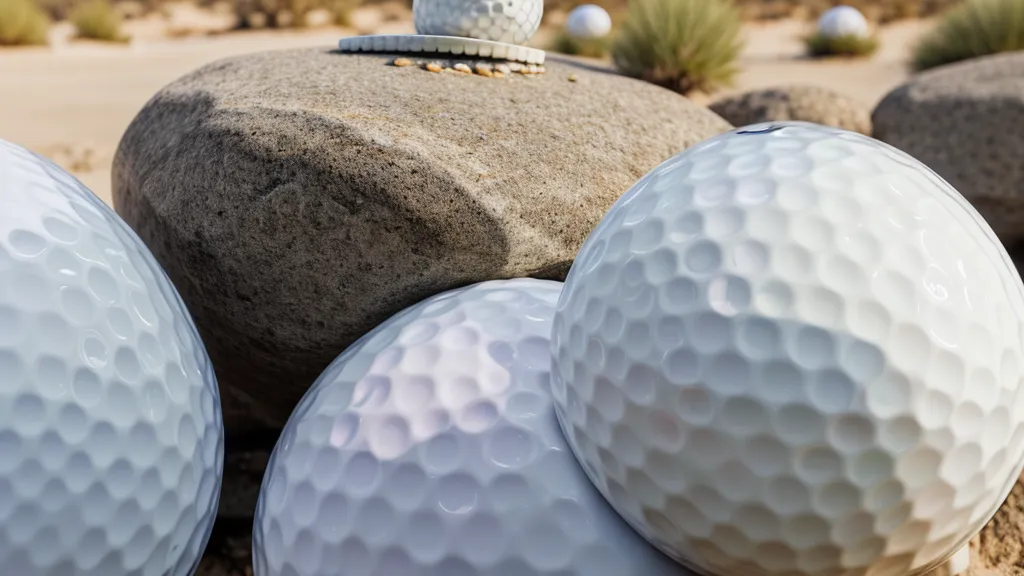
I ran a season alternating between the Vice Pro Plus and the Titleist Pro V1, since one is a 4-piece build and the other is the 3-piece standard most public-course players default to. More layers usually means more to lose once a cover opens up, so I expected the Vice to show wear faster once it started meeting Scottsdale hardpan. It held up closer to the Pro V1 than I predicted; a hit that should have gashed it left more of a dull scrape than an open cut.
The Pro V1 does stay whiter longer through a full bag rotation, no argument there. But cover resilience against granite and cart-path concrete came out close enough that the price gap stopped making sense for my game once I started tracking scuffs hole by hole instead of just eyeballing the box. Anyone who wants more pop in bright Arizona sun rather than raw toughness should look at my notes on the Best High Visibility Golf Balls for Sunny Arizona Desert Play, since visibility and durability are two different arguments.
The Spin You Trade for a Cover That Survives
Here's the tradeoff nobody puts on the box: a cover tough enough to survive a glancing hit off a saguaro rib gives up a little bite on short chips; saguaros are protected, so that's a comparison, not a suggestion to go test it. I noticed the tradeoff most on a delicate pitch over a bunker, where the Vice rolled out a foot or two further than a softer ball would have. That's a fair trade for a ball that finishes eighteen holes intact instead of looking chewed. I test this walking, not riding, usually behind the Alphard Golf Club Booster V2Pro, which frees up my attention for the ball instead of the cart. Traction on that same hardpan is its own separate headache, and I've written up what actually holds up underfoot over at traction on hard desert terrain.
How I Track Durability Round by Round
My method is simple: same ball model for an entire round, notebook out at the cart, a quick mark for every hole where the cover took contact with rock, concrete, or a bunker rake. Scuff versus gouge versus split gets its own column, because a dull scrape doesn't change flight the way an open seam does. Over enough rounds a pattern shows up fast; some covers stay cosmetic-only for fifteen or twenty hits, and others split on the first hard one.
A buddy of mine, Lonnie Gruber, texts me before almost every round he plays now that he's taken up the game seriously; we've known each other from commercial contracting circles for years, and golf is his newer obsession. He'll ask exactly which ball I'm gaming that week and why, then go buy whatever he was already going to buy anyway. He doesn't actually switch anything until his own ball splits open on him mid-round, and then suddenly he wants the whole spreadsheet.
Not every gear failure is dramatic like a split ball. One season I ran a lightweight stand bag because the ounces saved sounded good on paper, and the legs wouldn't hold the bag upright once I set it down on a sloped Bermuda fairway; I spent half a season propping it against my leg while pulling a club. That kind of failure doesn't show up in a durability column, but it taught me to test the whole bag setup under real course conditions instead of trusting a spec sheet, whether that's a stand bag's legs, a push cart's wheel base, or how a putter grip holds up once your palms sweat through the back nine.
Where the Rest of the Bag Fits Into the Durability Math
Ball economics follow a similar logic to work boots versus dress shoes: one looks better in the box, the other is built for the gravel. The Vice Golf direct-to-consumer model skips the retail markup, so buying in bulk brings the cost per lost ball down enough that losing three a round to the wash stops stinging. Swing speed matters here too; a ball built for tour swing speeds behaves differently in a mid-handicap swing than the compression numbers on the sleeve suggest, which is a whole separate rabbit hole from cover toughness.
Grip is the other half of surviving a desert round; a ball that survives the cart path doesn't help if your hands are slick by the back nine. I've leaned on FootJoy gloves through the hottest months mostly because they hold up longer before the material goes stiff and cracked, and I've paired that with a SWAG Golf Putter on the greens, partly for feel and partly because a good putter forgives a little more when your grip pressure changes shot to shot late in a hot round. None of that fixes a torn ball cover, but all of it adds up to fewer excuses by hole eighteen.
Picking a Durable Ball for Your Own Desert Rotation
The Alphard Golf Club Booster V2Pro has been the cart doing the walking during all of this testing, running a full 36 holes on one charge without me thinking about battery life, which matters when you're already tracking cover wear hole by hole and don't want to add cart anxiety to the notebook. A cart that can't hold a charge or tracks crooked on a slope is its own kind of durability failure, separate from anything happening to the ball in your pocket.
Putter choice runs on the same forgiveness logic as ball cover choice: a head that tolerates a slightly off-center strike keeps more putts on line than raw feel does, which is most of the argument in my Mallet vs Blade Putter for Amateurs with Inconsistent Strokes notes. Irons carry the same logic for anyone moving away from blades, where launch forgiveness matters more on firm desert lies than a pretty top line does. Durability and forgiveness usually matter more day to day than whatever spec sheet number looks impressive in the store.
There's a lag putt I still think about from the ninth at Talking Stick, twenty-two feet with two humps of break in it, and what stuck with me wasn't the read. It was that my forearms weren't tight by the time I got there, because I hadn't spent eight holes worrying about whether the ball in my pocket would still be round by the back nine. That's the actual payoff of testing for durability instead of just chasing spin numbers: less to think about standing over a putt that matters.
If you play a hard-pan desert track more than once a week, weight the decision toward cover toughness over spin numbers; a drawer full of scuffed-up balls isn't a badge of honor, it's a sign you bought the wrong cover for your course. That's why the Vice Pro Plus stays in my bag through the worst of the Scottsdale scrape season. Grab a dozen, play them until the cover actually gives out instead of retiring them early out of habit, and let the granite decide instead of the label on the box.