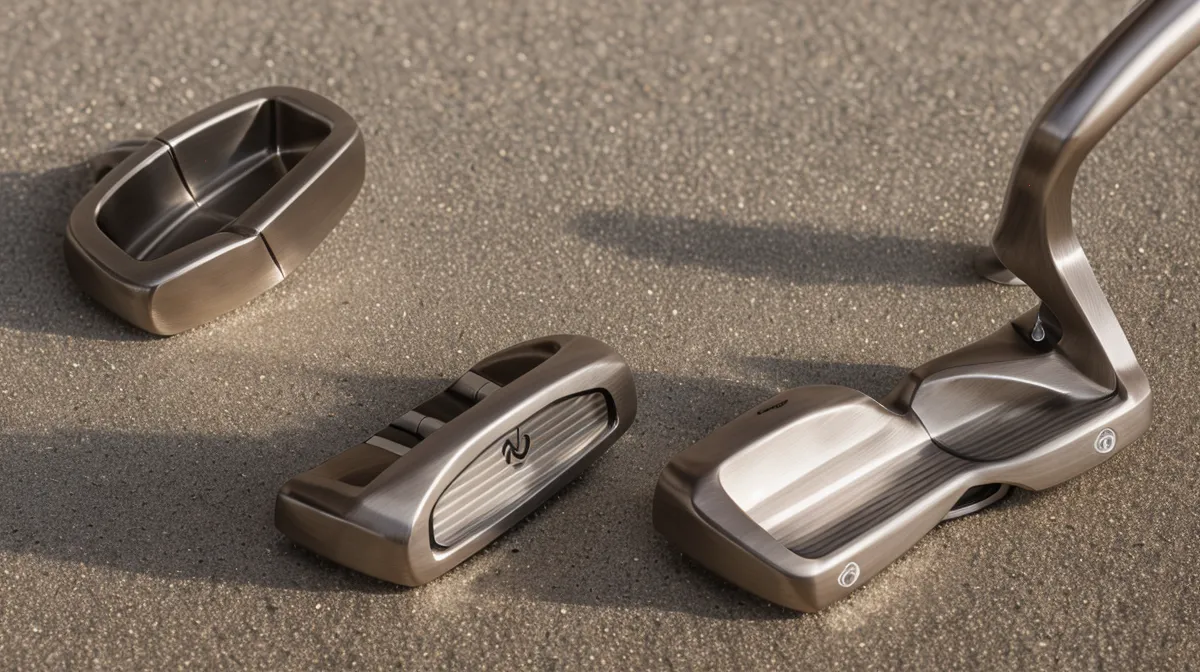
A toe-hang blade and a face-balanced mallet solve two completely different stroke problems, and most pro shops in the Scottsdale sprawl will fit you for the first one by default whether you need it or not. That is the actual myth behind most face-balanced putter advice floating around: the idea that toe hang is just a preference, when for a straight-back-straight-through stroke it is closer to the wrong tool entirely. I keep a notebook of every putter, grip, and ball I have rotated through chasing fewer three-putts, and the single biggest jump in that notebook came from matching the putter to the stroke, not the other way around.
Quick disclosure before the rest of this: some of the links below are affiliate links, and if you buy through one I earn a small commission at no extra cost to you. That commission is what lets me keep buying putters I might end up returning instead of borrowing demo models off a pro shop counter. None of that changes what follows, because a bad putter fitting costs you strokes long after the receipt is gone.
Toe Hang Solves a Problem a Straight-Back Stroke Doesn't Have
Toe hang exists to help a putter release through an arc; the head opens on the way back and closes through impact, matching a stroke that swings on a slight curve. Balance the shaft of a toe-hang blade on your index finger and the face will point at the ground. Balance a face-balanced head the same way and the face points straight up, square to the sky, because the mass sits directly under the shaft axis instead of trailing behind it. Fitters default to toe hang because most golfers do have some arc; the mistake is assuming everyone does. If your hands and shoulders move the putter straight back and straight through with almost no rotation, a toe-hang head fights you on every stroke, and no amount of practice fixes a mismatch at the source.
Mallet heads get credit for forgiveness, and on a mis-hit near the toe or heel that credit is earned; the full breakdown on why bigger heads forgive more belongs to a different piece on this site, not this one. What matters here is what a bigger head costs you on a lag putt. On a green with real tiers and a 40-foot read, a smaller, face-balanced blade gives me a cleaner sense of how much speed I am putting into the stroke than a mallet ever has; the mass sits more concentrated, so the feedback through the shaft is sharper. Forgiveness on short putts and feel on long ones pull in opposite directions, and most buying guides only ever talk about the first one.
Does a Fancier Milling Pattern Actually Change Your Stroke?
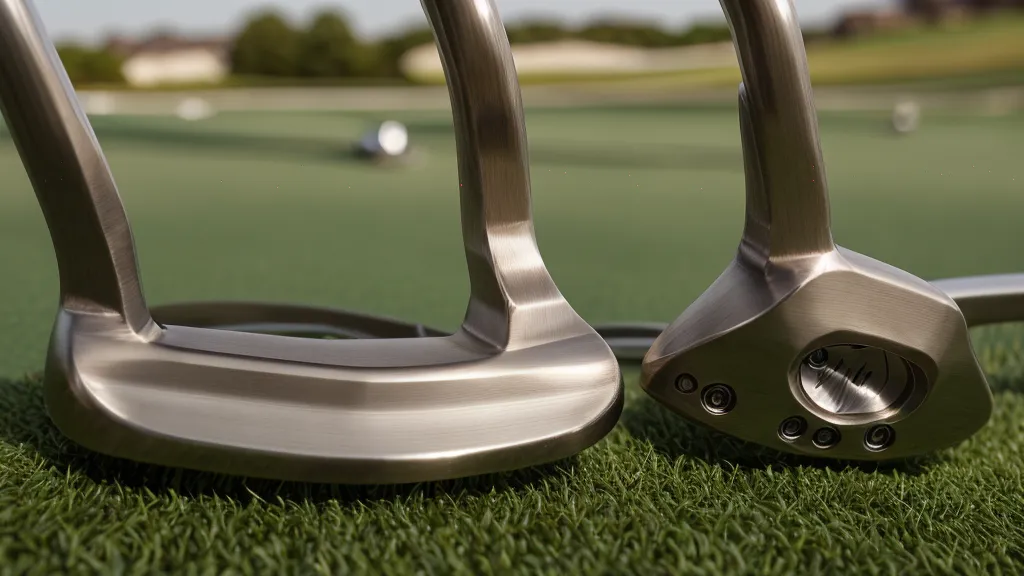
Picking up a SWAG Golf Putter was supposed to settle whether the milling hype was real or just a nice headcover with a price tag attached. The head is precision-milled from 303 stainless steel, soft enough to feel the ball coming off the face, hard enough to survive riding around in a bag through a full season of valley rounds. The face stayed square through the stroke in a way my old setups never managed, and the putts-per-round number in my Scottsdale gear log settled into the high twenties instead of drifting into the thirties on the bad days.
The milling cuts deep enough that you can hear where you hit it before you even look up; a pure strike has a tighter, higher click than one off the edge of the face. That feedback is what I trust on a lag now. Standing over a 22-foot putt on the ninth at Talking Stick this spring, I noticed my forearms were not tight the way they used to get by that point in a round, just loose enough to let the putter swing instead of me steering it. Hank Viteri, who I play with most Wednesdays, is a 17 handicap who somehow putts like a scratch golfer the second actual money is on the line, and he noticed that same square face long before I bothered writing it down. For a longer look at the brand itself, including the parts I would still change, there is a full SWAG Golf Putter Review on this site.
Carrying the Face-Balance Decision Into the Walking Setup
A putter does not live in isolation from the rest of the bag, especially once you are walking instead of riding. I run the Alphard Golf Club Booster V2Pro on my push cart now, mostly because it keeps my legs fresher through the stretch of holes where putting actually gets hard. Conversion from a manual cart took about half an hour the first time, and the battery has yet to quit on me across a full 36-hole Saturday. Before that I tried a cheap aluminum push cart that wobbled on every downhill stretch at Talking Stick and nearly tipped twice carrying a full bag; it saved a little up front and cost me more patience than it was worth. Anyone shopping that category should weigh stability on slopes before weight on the shelf, which is really its own topic worth a full piece rather than a paragraph here. Keeping that cart's electronics running well into a second season is its own routine too, one I wrote up separately on maintaining the Alphard Club Booster V2Pro long term.

Ball choice matters just as much once the putter stops being the variable. I have been testing Vice Pro Plus against Titleist Pro V1 for most of this year, and the Vice gives a firmer click off a milled face that helps me trust distance on longer putts. Once the putter and the ball both behave the same way every time, the only thing left to blame is the read or the speed, which is a far more honest place to be standing over a putt.
Durability Decides What Stays In the Bag, Not the Headcover
Collector hype fades fast once a club actually plays fifty rounds in Arizona dust and heat; what is left after that is what matters. My FootJoy shoes carry a two-year warranty, which matters more than it sounds once you are walking four miles a round through loose sand and cart paths. The SWAG head has kept its finish clean the whole time, no haze, no corrosion near the face, which says more about the steel than any headcover design ever could. A reader named Alma Vickery emailed a while back asking whether desert heat does anything to milled steel the way it does to electronics on a push cart; the honest answer is not much, as long as the putter is not baking in a trunk all afternoon between rounds.
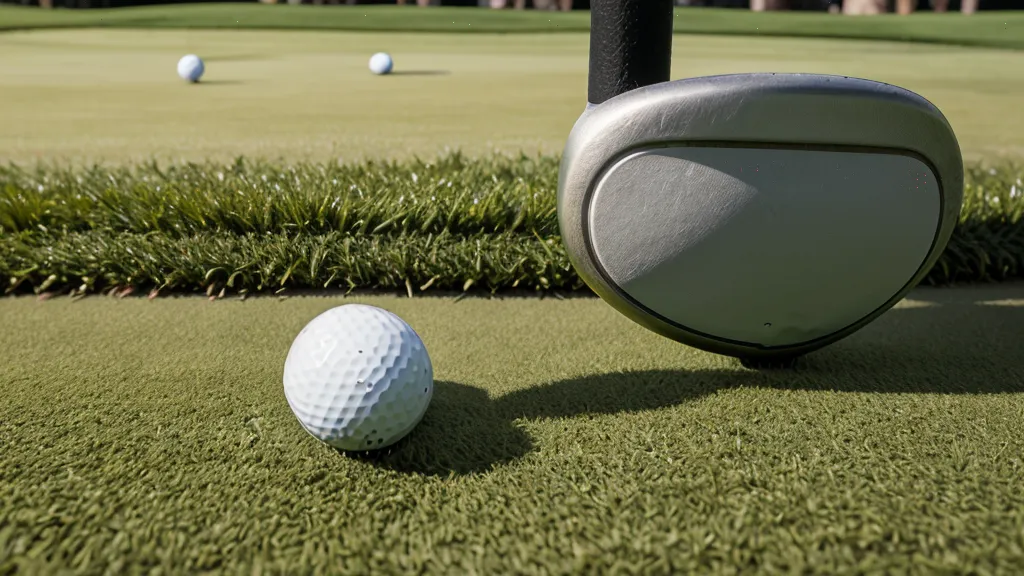
Greens running soft after overnight watering change the stroke more than people admit. On a slower, heavier green at Talking Stick, a face-balanced blade lets me putt a touch more aggressively without worrying the face will twist through the wet grass the way a toe-hang blade sometimes will. The confidence there is not about the putter being better in some abstract sense; it is about the putter matching the specific way my hands and shoulders move the club.
So set aside the common advice that pushes every amateur toward toe hang just because better players use it. If your stroke genuinely goes straight back and straight through, do the finger-balance test before you buy anything: rest the shaft across one finger, and if the face sits looking straight up at the sky instead of toward the ground, that is the head built for your stroke, not the one with the biggest name on the sole. A face-balanced option like the SWAG Golf Putter is one way into that category if you want milled feel along with it; check current availability before deciding, since drops on that one do not sit around long.
| Product | Rating | |
|---|---|---|
| SWAG Golf Putter Top Pick | 9.1 | Read More → |
| Alphard Golf Club Booster V2Pro | 8.9 | Read More → |
| Titleist Pro V1 | 9.3 | Read More → |
| Vice Pro Plus | 8.7 | Read More → |
| FootJoy Premier Series | 8.8 | Read More → |
SWAG Golf Putter
Pros
- ✔ Precision 303 stainless steel milling provides elite feedback
- ✔ Face-balanced design perfectly suits straight-back strokes
- ✔ Exceptional resale value due to limited production runs
- ✔ US-assembled quality that survives desert course conditions
Cons
- ✘ Limited drops mean you have to be fast to buy
- ✘ Premium price point reflects the collector-grade materials