
The rear wheels grip the downhill on fourteen at Papago and hold their line; my feet don't scramble to keep up the way they used to behind a manual frame. That's the short version of why I converted to electric push carts, though it took a stack of broken gear and a knee that never fully came back from a running injury to get me there. Walking golf is supposed to feel like exercise, not damage control, and for the first time in years my back nine doesn't feel like a negotiation with my own joints.
Quick disclosure before the comparison starts: a few links below are affiliate links, and if you buy through one I earn a small commission at no extra cost to you. Nobody sends me a loaner or a press kit for these picks; everything gets bought with my own card and rotated through real rounds, which is more than most golf gear reviews built off a single demo day can say. My handicap sits at 12 right now, for context on who's actually testing this stuff.
Electric Push Carts vs. the Manual Carts I Wore Out First
My first push cart after the knee injury was a bargain aluminum frame, marketed as light enough to toss in any trunk. It wobbled on anything steeper than a parking lot ramp, and on the downhill stretches at Papago it nearly tipped sideways more than once, spilling balls into the desert scrub. I patched the frame with zip ties for most of a season before finally retiring it. That's the manual side of this comparison: cheap to replace, easy to carry, and completely unreliable the moment the terrain tilts.
Wednesday mornings I play with a guy named Hank Viteri, and Hank has read every equipment catalog that's landed in his inbox for two years running without buying a single new piece of gear; he can recite spec sheets from memory and still pushes the same wobbly frame he bought secondhand. Whether a motorized axle actually fixes the lateral-tip problem that plagues manual carts on steep desert descents comes down to a trade-off: you gain stability, but you're hauling extra battery weight over the rear wheels to get it, and that trade-off is really the whole case for going electric.
The Garage Conversion That Beat a Full Electric Rig
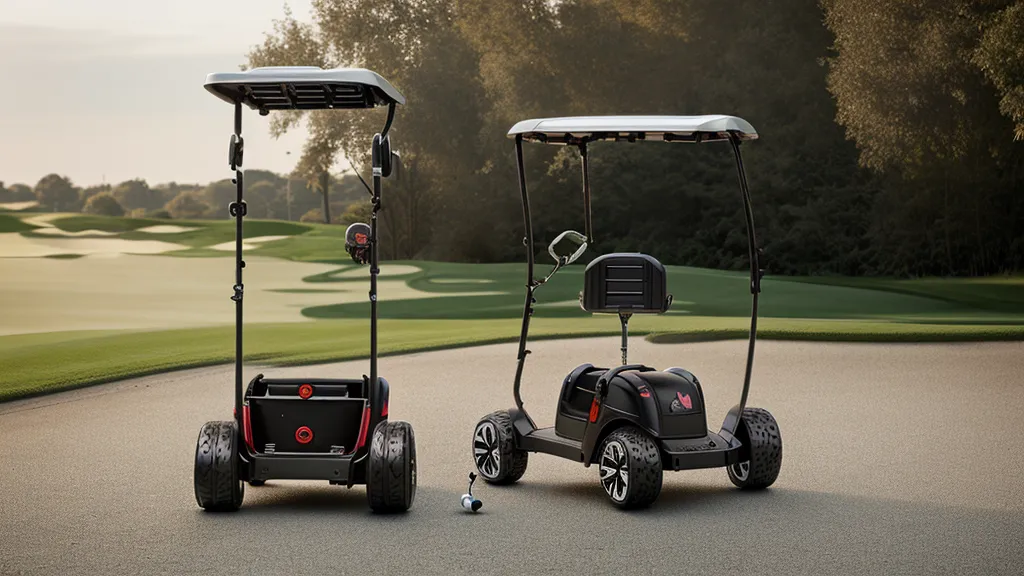
Fully integrated electric rigs were the obvious alternative, the kind that look like a miniature moon rover and roll off the showroom floor as one complete unit. They're heavier to lift, harder to fold into a trunk, and overkill for anyone who already owns a decent manual frame. The Alphard Golf Club Booster V2Pro solved it differently: it's a motorized axle that bolts onto the rear of an existing push cart instead of replacing the whole thing.
Installing it took about 35 minutes on a weeknight once the brackets were lined up. My garage doubles as a testing bench these days: one wall is a pegboard of old putter grips, hung skinny to fat like a shoe rack nobody asked for, and another wall of cinder block picks up a fresh paint-marker tally for every finished round, more habit than record-keeping at this point. Afternoons bring a hard glare through the one window facing west, the kind of light that makes fine work a bad idea after lunch, so the axle swap happened in the morning instead.
Six years of rotating through gear taught me that lesson the expensive way. An earlier manual frame, before the aluminum wobbler, had its factory axle snap clean on a cart path before it had seen much wear; the wheel folded sideways and I finished the day carrying my bag on one shoulder the rest of the way. That failure is why I stopped trusting the cheapest option in any gear category and started checking what a frame is actually built to carry before I buy it.
What Wheel Size Actually Does on a Cart Path
Most of what separates a cart that tracks true from one that binds up near the tee box comes down to wheel size, not motor strength. Larger rear wheels, in the eleven to twelve inch range, roll over packed dirt and desert rough with a lot less resistance than the eight or nine inch wheels bolted onto entry-level frames; the gap shows up most on uphill sections and anywhere the ground turns loose and gravelly. My old aluminum cart had the small wheels. The Alphard axle came with the bigger ones, and the difference climbing a dogleg is not subtle.
Does Ball Compression Hold Up When You're Tired?
Pushing a manual cart for four hours puts my heart rate somewhere in that steady labor zone the whole round; with the motor doing the work, it's closer to a brisk walk. I finished a round recently and realized the same ball I'd been playing since the first tee still felt the same off the face on eighteen, which almost never happened when I was gassed by the back nine. I was still gaming Titleist Pro V1s that round, same compression the whole way around, and fatigue is usually the reason that stops being true.
It wasn't always a smart choice, either. One windy afternoon I grabbed a low-compression ball out of the bag out of habit instead of picking something built to hold a line in a crosswind, and paid for it with lost balls off the tee before switching back at the turn. Cover durability off desert cart paths is its own rabbit hole, and it's a big part of why some balls scuff and lose their flight faster than others out here, but that's a longer conversation than this one.
The Weight Distribution Problem
Balance matters more with a motorized axle than it ever did with a manual one. Pack the right pocket heavy with water bottles and a spare sleeve of balls, and the front wheel starts drifting on uneven ground, fighting the motor instead of working with it. That's a known quirk of the conversion, not something I imagined after one bad round; tracking stays a little loose until the load sits even across the frame. Once I redistributed what I was carrying in my golf stand bag, the cart tracked straight without any correction from the remote. Bag weight matters for anyone walking regardless of what's pushing the cart, and it's worth sorting out before you ever get to the wheel question.
The Remote Has a Mind of Its Own
Carrying the remote in the same pocket as your keys will eventually trigger a ghost turn that sends the whole rig veering toward a saguaro before you can grab it back. Clipping it to my belt after the second near miss fixed that. Once the habit sticks, the remote fades into the background the way a car's turn signal does; you stop thinking about it entirely. The bigger win is how the axle comes off the frame in about ten seconds flat, back to being a manual cart that folds into a trunk. That matters more than battery capacity does once you're the one lifting it over a curb in a packed parking lot.
Battery Life and Shoes That Didn't Hold Up
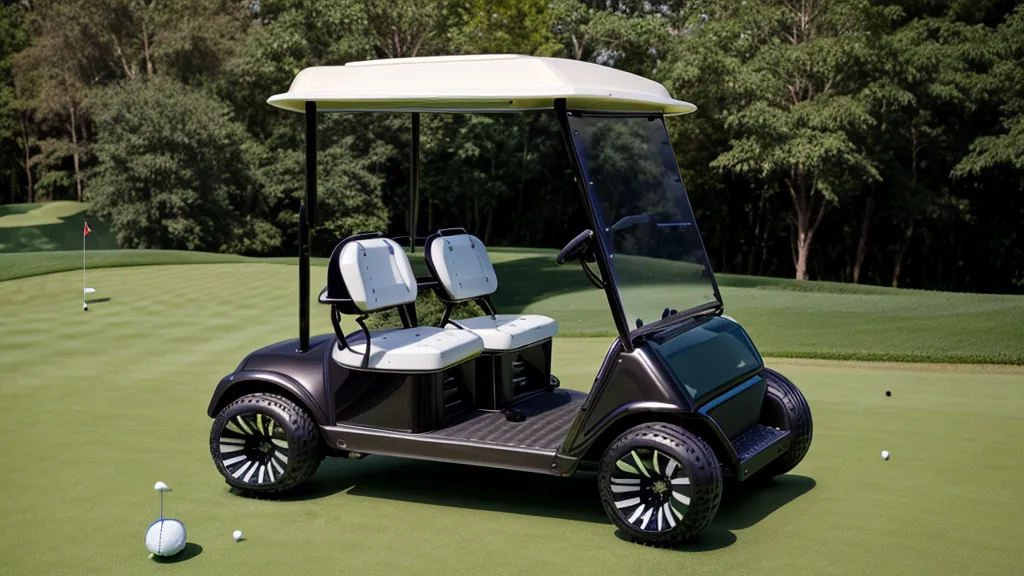
The lithium-ion battery on the V2Pro is rated for 36 holes, but Arizona heat makes that number optimistic. Voltage sag starts slowing the motors on steep hills somewhere around hole 27 in my experience, so charging after every round has become a habit rather than an option. It's a small price to pay next to pushing forty pounds uphill in the sun.
Shoes were a separate lesson entirely. A pair of FootJoy shoes I trusted through a wet stretch a couple springs back started leaking around the welt by the fifteenth round, well before the tread wore down enough to explain it; water got into the sock liner on a dew-heavy morning and my feet stayed damp for the whole back nine. I've been more skeptical of waterproof claims since, and I check the welt seams on any new pair before I trust them on a wet course. Gloves have their own version of that problem in this heat; they lose their tack faster than the leather looks like it should, which is a whole separate review waiting to happen.
Where the Putter and the Rest of the Bag Rotated Out
Putters took the longest to settle. I swapped the grip on my SWAG Golf Putter hoping a slightly thicker profile would ease the ache in my wrist, and pulling the old grip loose with solvent left my eyes watering in the closed-up garage for the better part of an hour. The new grip changed my feel on short putts so much that I missed inside four feet for the better part of ten rounds before my hands relearned the stroke. Grip diameter affects wrist pressure more than most amateurs realize, and it's worth its own deep dive rather than a paragraph here.
Same story with the rest of the bag. Mallet heads forgive an inconsistent stroke in a way blades never will, which matters if your putting is as streaky as mine. Irons with more built-in launch help are the same conversation for anyone moving away from blades before they're really ready. None of that is the subject of this piece, but it's worth knowing those rabbit holes exist before you sink money into any one category.
The push cart conversion still shows up clearest on the scorecard. Legs that aren't dead by the sixteenth green actually read the break instead of guessing and hoping for two putts. My notebook has the back nine running about 1.6 strokes better on rounds with the motor doing the pushing, and being able to check a yardage book or wipe down a putter with both hands free changed the rhythm of the whole round more than any single swing thought has.
So, Manual Cart or Electric Axle?
If you already own a decent manual frame and walk two or three times a week, converting it with a motorized axle beats buying an entirely new electric rig; you keep the folding size you're used to and add power without the bulk. If you're buying your first cart from scratch, a fully integrated unit might make more sense since you skip the bracket-fitting fuss of matching an axle to a frame that wasn't built for it. Either way, footwear and ball choice matter more than people expect once the cart stops being the limiting factor; the best spiked golf shoes for hardpan desert terrain keep your feet planted the same way a well-balanced cart does, and the best performance golf balls for moderate swing speeds are worth a look if compression matching has never crossed your mind before.
A reader named Alma Vickery emails me every couple of months from Mesa, and she never signs off without mentioning her last round score. Knee trouble is what got her asking about electric push carts in the first place, and hearing that the conversion held up for her too means more than any spec sheet could. If your joints are starting to dictate how you play instead of your swing, the Alphard Golf Club Booster V2Pro is the version of this upgrade that made sense for a guy who already had a frame worth saving.