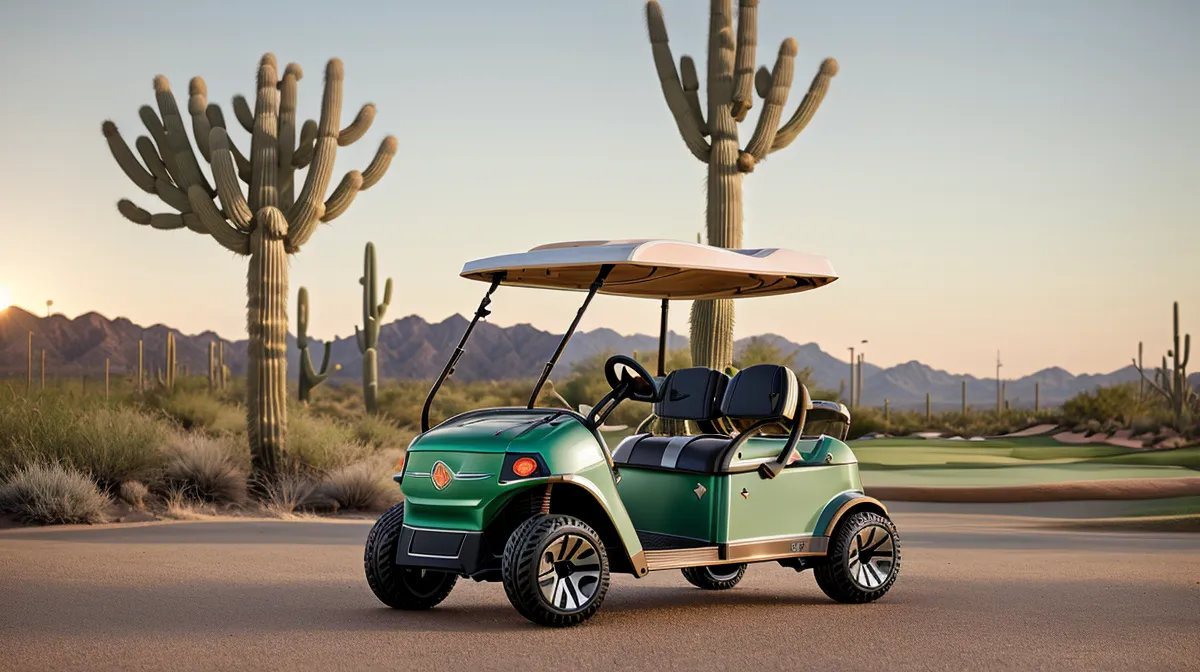
One hundred six degrees on the thermometer bolted to the halfway house at Talking Stick Golf Club in Scottsdale, and the aluminum frame on my push cart was already too hot to touch before the turn. Most golfers walking hilly desert courses assume that kind of heat and grade is a motor problem, and the golf industry has been happy to sell them a fix for it. A well-built non-electric push cart handles those same hills fine once you understand what actually keeps four wheels tracking a straight line, and that has nothing to do with a battery.
A disclosure before anything else: several of the products named below are gear linked through affiliate partnerships, and if you buy through one of those links I earn a commission at no added cost to you. None of what follows came from a press kit or a loaner sent by a brand rep; everything here got walked and pushed across real rounds first. Testing notes and the full policy live on the Editorial Policy page.
Most Golfers Blame the Hills, Not the Cart
Ask around the bag drop at Talking Stick and you will hear the same theory every time: the hills are too much for a manual cart, so you need power. That is usually the moment someone points you toward a conversion kit like the Alphard Golf Club Booster V2Pro, which bolts a motor onto your existing frame and turns it into something closer to a remote-control caddy. It is a clever piece of engineering. It is not, on its own, the fix for a cart that tips on a side-hill lie or drifts off the path by itself.
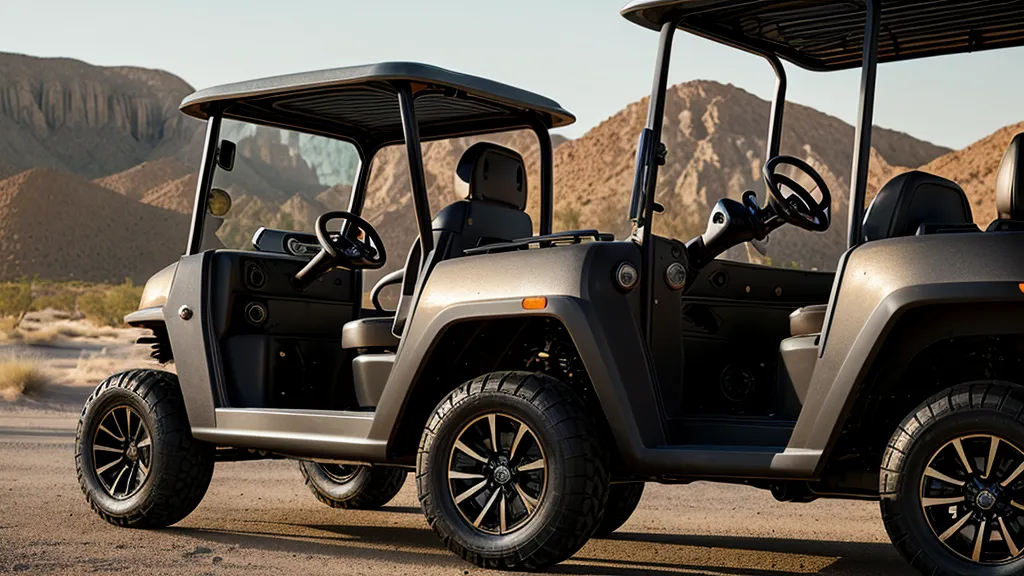
I have pushed a converted frame through plenty of rounds, the same Alphard Golf Club Booster V2Pro setup people keep recommending, and the motor never once fixed a tracking problem that started at the wheels. A wide, low-slung base holds a line on a grade; a motor just moves whatever base you already have, good or bad, a little faster.
What Actually Makes a Push Cart Stable on a Grade?
Stability starts with wheel diameter. A bigger front wheel rolls over ruts and embedded rock instead of catching in them, which is the real difference between a cart that tracks straight and one that yanks sideways every ten feet. Frame width matters just as much; a wider three-wheel stance resists tipping on a side-hill lie far better than the narrow, foldable frames built for flat suburban courses. The brake matters more than people think, too. A rear wheel lock that engages with a clean, single metallic click on a hard desert path is the only thing standing between your cart and a runaway roll down a fairway.
I found this out carrying a SWAG Golf Putter in the bag on one of Talking Stick's steeper side-hill lies, half expecting the whole cart to tip before I ever got to use it. It did not, because the frame underneath was wide enough to hold. The terrain out here does not forgive a bad frame either; you are rolling over decomposed granite and hardpan more than actual grass on most transitions, and a narrow wheelbase catches on that surface constantly. Weight placement inside the bag changes the equation too. Loading the heavier Titleist sleeves low and centered keeps the whole cart's center of gravity down where it belongs; stack the heavy stuff up top and even a well-built frame starts to wander on a downhill.
None of that stability work matters if the bag itself is the problem. I carried a heavy cart bag for a full season that left my shoulders aching by the twelfth hole on every walking round, and no amount of frame engineering fixes a bag that is simply too much to push uphill in the heat; bag weight is its own separate rabbit hole worth reading up on before you buy either piece.
On the ninth green at Talking Stick, I lagged a putt from twenty-two feet and realized, walking up to tap in, that my forearms were not burning the way they usually do coming off a hilly back nine. My handicap sits at 14.2 these days, and fresher legs on the back nine account for more of that number than any swing change I could point to.
Know When a Motor Conversion Actually Earns Its Keep
A motor conversion still has a real place, just not as the fix for a wobbly frame. If a knee or hip makes pushing sixty pounds of gear up a grade genuinely painful, a kit that adds power to an already stable frame is solving an actual problem instead of masking one. The lithium-ion battery in the Alphard setup covers thirty-six holes on a single charge, which is enough for a full day at Talking Stick with room to spare, and the hardware carries a two-year warranty. Heat is the catch out here; Scottsdale garages routinely climb into triple digits, and a battery left sitting in that kind of oven degrades faster than the warranty period suggests, so bringing the pack inside after a round is a small habit that saves a much bigger headache later. Assembly can run fiddly too if your existing frame needs a non-standard bracket, so budget an evening for the install rather than expecting it in the time it takes to eat lunch. Front-wheel tracking can also drift for the first few rounds after a conversion until the added rear weight is balanced out, which is worth knowing going in rather than discovering on a downhill.
Shoes, Grips, and Balls: The Rest of the Walking Kit
Feet and hands have to keep pace with the cart too, or none of the frame work above matters much. FootJoy's Pro/SLX line has kept its grip on hardpan and loose granite better than anything else I have walked in at Talking Stick, which matters more on a guided cart than people expect, since you are steering across a slope rather than just standing on one; that kind of traction is really its own subject, covered in more depth in the Best Golf Shoes for Walkers with High Arches piece. Grip pressure on the putter shifts too, once your hands have spent a full round on a cart handle instead of a bag strap, and that is a separate topic worth its own read rather than a footnote here.
Ball durability takes its own hit on desert cart paths no matter what you are pushing. I have gone through Vice Golf boxes and Titleist sleeves alike, and neither cover survives concrete and rock forever; matching a ball's compression to your actual Moderate Amateur Swing Speeds does more for your scorecard than any durability spec anyway. Visibility earns its keep once a ball rolls free off the path into scrub. I still play the Titleist Pro V1 for spin control on Talking Stick's greens, but a sleeve from the Best High Visibility Golf Balls for Sunny Arizona Desert Play lineup saves real time hunting brush instead of pushing your cart in circles looking for it.
Hands wear out faster than people admit in this heat, and glove longevity is a maintenance question all its own, separate from anything cart-related. A mallet putter forgives an inconsistent stroke better than most blades when you arrive at the green a little gassed from the walk, and the same logic carries into the irons; a set built around launch forgiveness covers for a tired swing on the back nine better than a blade ever will.
My Real Verdict on Going Non-Electric
The real question at Talking Stick was never electric versus non-electric; it is stable versus unstable. Get the wheel diameter, frame width, and brake right on a manual cart and you can walk the steepest transitions on the property without punishing a bad knee. A friend of mine plays doubles pickleball at Scottsdale Ranch Park three mornings a week and swears his cardio solves everything on a hilly course; it does not fix a narrow frame that tips on a side-hill lie any more than fitness fixes a bad tire. If joint pain is the actual barrier and the frame underneath is already solid, adding power with something like the Alphard Golf Club Booster V2Pro is a reasonable next step, not a substitute for buying a stable cart in the first place. Buy the stability first. Add the motor only if you still need it after that.