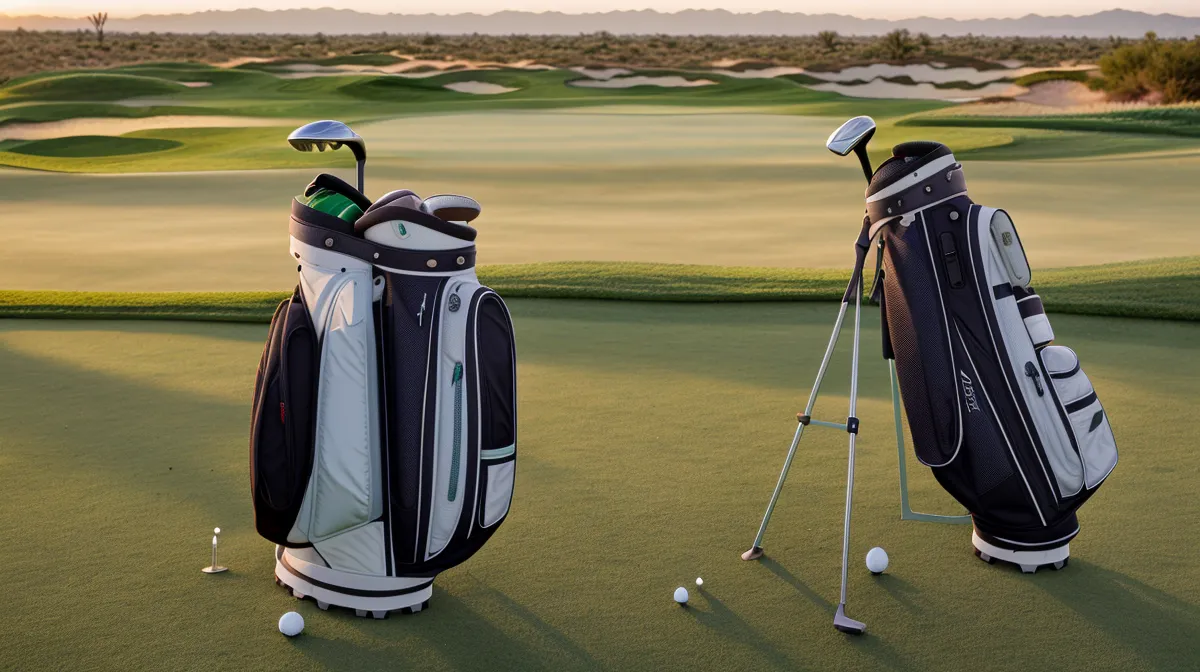
Why does a bag that rides perfectly strapped to a cart turn into dead weight the second you sling it over your shoulder for eighteen walking holes? That question splits every regular group at Kierland Golf Club into two stubborn camps, and six years of rotating through more bags than I care to admit hasn't fully settled it for me either. The honest answer sits somewhere between durability and denial, and most Titleist reviews skip the part where walking and riding ask two completely different things from the same piece of golf gear.
Here's the actual rule, before this turns into a debate: a hybrid bag only works for both jobs if the frame, the strap routing, and the base are built for a cart first and a shoulder second; that order matters more than the fabric or the colorway ever will. Most golfers assume they need two bags, a feather-light carry model for walking days and a hulking cart bag for the days they ride, and that assumption is exactly what keeps people buying the wrong thing twice. A few of the links below point to gear I still use, Titleist included, and they pay me a small commission if you buy through them, on top of the disclosure above, not instead of it.
The Two-Bag Myth Most Weekend Golfers Still Believe
Most hybrid bags exist because somebody got tired of owning two of everything. A golf bag that tries to do both jobs needs a 14-way top for organization, a stand-capable base for walking, and a cart-ready frame that won't rattle apart on bumpy paths; that's three separate engineering problems stuffed into one product, and plenty of brands fail at least one of them. Titleist didn't. The hybrid line earned its spot in my trunk by surviving the one thing that kills most bags early, pocket space nobody ever uses correctly. I keep two sleeves of Vice Golf balls rotating through the side pocket at all times, mostly because I went through a stretch testing low-compression balls that kept gouging badly against the granite cart paths at Kierland and needed backups within reach, not buried under a rain jacket.
Why the Weight Argument Misses the Real Problem
Weight is the easy argument against the Titleist Hybrid 14, and it is not wrong. Empty, it sits at 5.6 pounds, which is a real number against a sub-three-pound carry bag, and I felt every ounce of it by the back nine during a tournament round. But weight alone does not explain why some heavy bags feel fine on a walking round and others wreck your shoulders by hole six. My handicap sits around 15 this year, and I have carried enough different bags at that number to notice that balance matters more than the scale. A reader named Alma Vickery emailed last spring asking whether the Hybrid 14's base would actually sit flush on her push cart without the strap crushing the side pockets. She has told me more than once that specific answers like that are the only reason she hasn't wasted money on the wrong gear twice already, so I checked instead of guessing. The base sits flush, and that single detail probably matters more to a walking round than the 5.6 pounds does.
What a Full Season of the Same Bag Actually Reveals
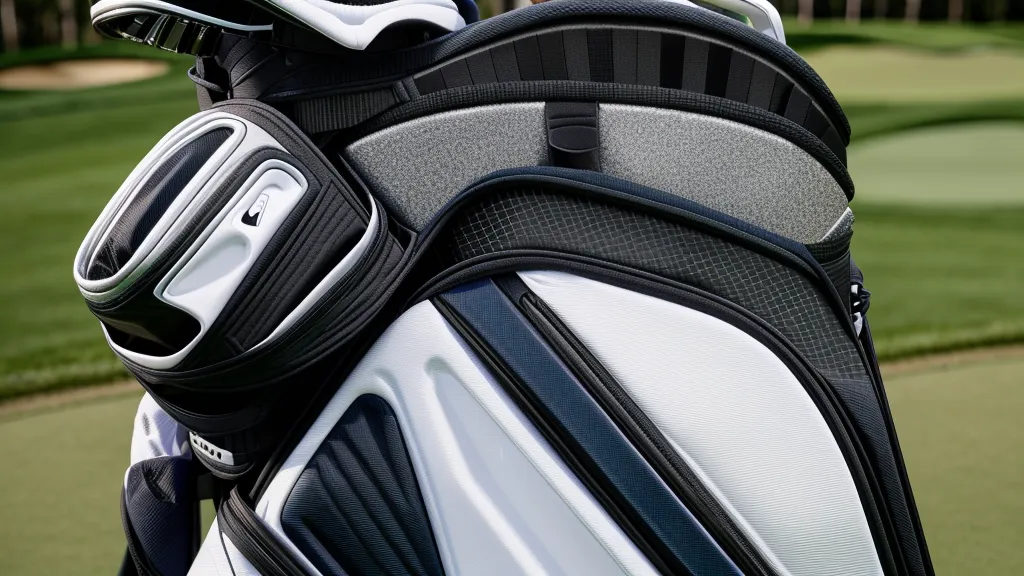
Thirty rounds into any bag, the cheap parts start talking. Zippers snag, stand legs lose their snap, and the fabric around the base starts to fray where it rubs against a cart bracket. The Hybrid 14 never did any of that for me, and the stand legs still snap back against the frame with the same solid motion they had on round one, the same feeling you get out of a pair of broken-in FootJoy boots once they've finally shaped to your foot. The 14-way top is the actual reason people pay extra for this bag, not the strap system. Cramming an oversized SWAG Golf Putter grip into a standard 5-way top means it rubs against whatever iron sits next to it every single time you pull it out, and I lost a short par putt at Kierland two summers back because the grip snagged on my 6-iron on the way out of the bag and threw off my rhythm before I'd even set up. Full-length dividers fix that specific annoyance; every club gets its own lane, and the putter never fights the irons for space again.
Stopping the Cart Twist Nobody Warns You About
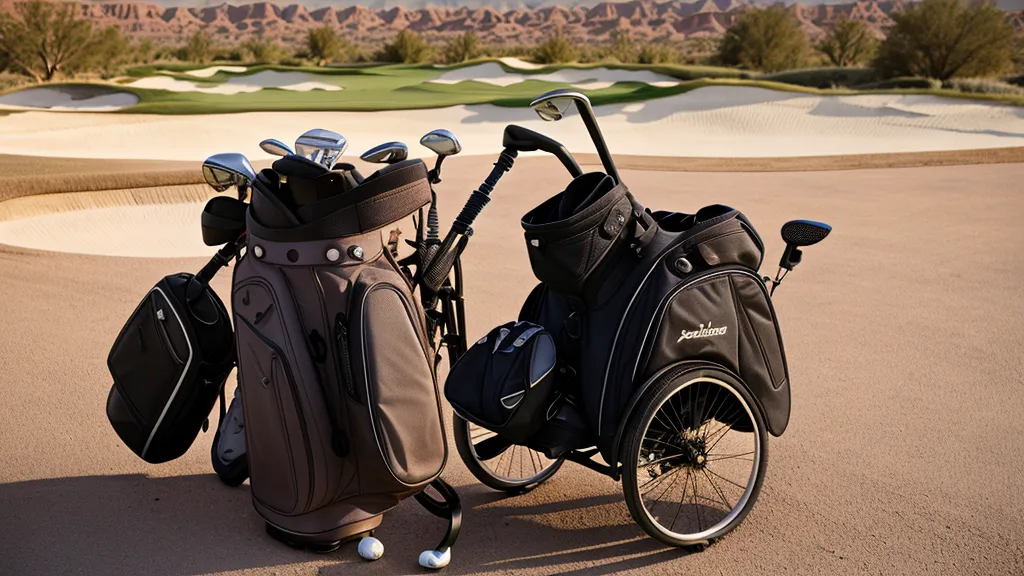
Riding changes the equation completely. Most bag reviews talk about storage and ignore the one failure that actually ruins a cart round, which is bag twist. Strap a standard bag onto a cart and the strap itself crushes the side pockets flat or lets the whole bag rotate sideways every time the cart hits a dip, and on the bumpier stretches of cart path at Kierland that rotation turns club selection into a guessing game. Titleist cut an actual notch into the base and ran a dedicated tunnel for the cart strap, so the bag rides vertical instead of twisting loose. Hank Viteri, who I play with most Wednesday mornings, noticed it before I pointed it out; he asked why his bag kept sliding against the bracket while mine sat still through the same stretch of cart path. I have since paired this bag with the Alphard Golf Club Booster V2Pro on days my knee wants the walk without the full physical cost, and the base fits into that cart's bracket with none of the wobble I used to fight. Keeping that battery charged between rounds is its own separate habit, one worth getting right if you go that route. If you are weighing whether to carry a utility iron instead of a hybrid in one of those dividers, my notes on the best Titleist utility irons cover how they sit in a 14-way top without clanging against the shafts next to them.
Hybrid 14 vs Hybrid 5: Which One Wins for Walking and Riding Both
The Hybrid 5 exists for golfers who walk more than they ride and don't want to manage fourteen separate slots. It trades the full divider system for a simpler 5-way top, shaves some weight off the frame, and looks less like a utility vehicle. On a quick nine after work I have reached for the simplicity of the 5-way more than once. For a full Saturday round, though, the organizational upside of the 14-way top outweighs the extra pound every time, and that pound matters less than people assume once the weight is actually balanced across both shoulders instead of one.
Balance is what that double-strap system actually buys you, and it's the real reason a 5.6-pound bag can still work on a walking round. The padding holds its shape the way a good mattress does, not the way cheap sneaker foam flattens out after a season. After a long 36-hole Saturday at Kierland this spring, I noticed something while signing the scorecard: no blister, no hot spot on either foot, nothing from a body quietly compensating for a bag pulling it sideways all day. That is the actual test for whether a hybrid bag earns its weight, not the number on a hanging scale, but whether your gait still looks the same walking off eighteen as it did walking onto one. I have compared that kind of consistency to my own notes on Titleist Pro V1 vs Vice Pro Plus testing, and the throughline across both is the same: Titleist gear rarely surprises you with a failure at the worst possible moment.
The Real Verdict on the Titleist Hybrid Series
None of this makes the Hybrid 14 right for everybody. If you walk nearly every round and rarely touch a cart, the Hybrid 5 will save your shoulders some wear without costing much in organization. But if your weeks mix riding and walking the way most public-course golfers' weeks do, the math only works one way. Buy the bag built for both jobs instead of two bags built for one job each, and put whatever you save toward something that actually lowers your score rather than another flashy putter. Looking at my FootJoy shoes at the end of a long season, scuffed from cart brackets and desert dust same as the bag, I would still rather protect my clubs than chase a headcover that only protects a putter's finish. The Titleist Hybrid 14 has earned its spot in my trunk through full seasons of sweat and bumpy cart paths, and at this point I would rather replace a dozen golf balls than replace this bag.